
Sale
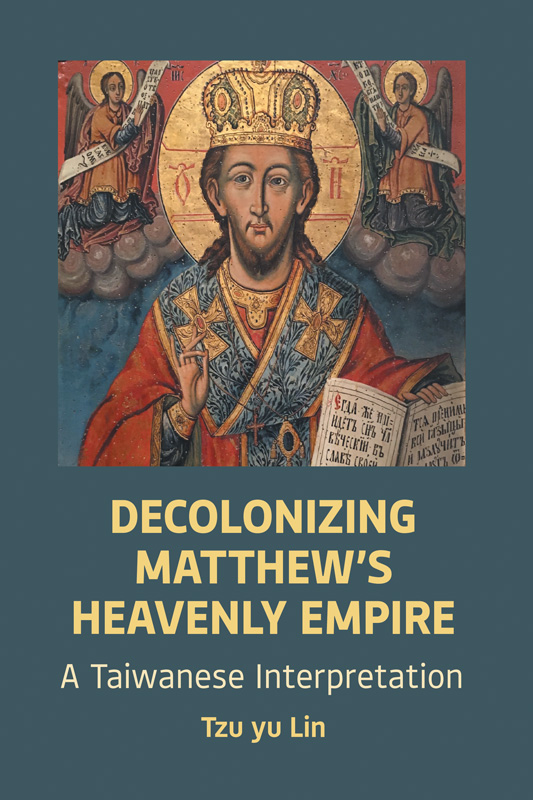
Decolonizing Matthew’s Heavenly Empire: A Taiwanese Interpretation
Published: Nov 2026
Original price was: £78.00.£36.00Current price is: £36.00.
What happens when the ‘Good News’ announces an empire? Tzu yu Lin’s monograph rereads the Gospel of Matthew by translating ἡ βασιλεία τῶν οὐρανῶν as the ‘Heavenly Empire’ and taking its imperial language seriously. It examines the infancy narrative, the parables of Matthew 13, the Last Judgment, the mountain sermons, and the Great Commission in order to place the Heavenly Empire itself at the center of imperial critique. These readings follow how Matthew presents the Heavenly Empire’s claims over all peoples and how those claims shape the Gospel’s vision of salvation.
Drawing on decolonial theory, the book approaches Matthew through questions of modernity/coloniality and the imperial power carried by promises of salvation. A Taiwanese context provides one lens for recognizing how domination can be justified through promises of unity and well-being. This context also brings non-Western imperialism into the discussion and offers a different angle from readings centered primarily on Rome or Western imperial power.
At the center of the book is the claim that Matthew’s liberationist Good News and the Heavenly Empire’s imperial project are ‘two sides of the same coin’. The rhetoric of salvation gives this imperial project its justification and moral force, allowing the Heavenly Empire to present its expansion as Good News for all peoples. Reading these two dimensions together changes how familiar Matthean texts appear and directs attention to the coloniality carried within the Gospel’s promise of salvation. The monograph therefore identifies the darker side of the Good News as coloniality itself.
Sale
Decolonizing Matthew’s Heavenly Empire: A Taiwanese Interpretation
Original price was: £78.00.£36.00Current price is: £36.00.
What happens when the ‘Good News’ announces an empire? Tzu yu Lin’s monograph rereads the Gospel of Matthew by translating ἡ βασιλεία τῶν οὐρανῶν as the ‘Heavenly Empire’ and taking its imperial language seriously. It examines the infancy narrative, the parables of Matthew 13, the Last Judgment, the mountain sermons, and the Great Commission in order to place the Heavenly Empire itself at the center of imperial critique. These readings follow how Matthew presents the Heavenly Empire’s claims over all peoples and how those claims shape the Gospel’s vision of salvation.
Drawing on decolonial theory, the book approaches Matthew through questions of modernity/coloniality and the imperial power carried by promises of salvation. A Taiwanese context provides one lens for recognizing how domination can be justified through promises of unity and well-being. This context also brings non-Western imperialism into the discussion and offers a different angle from readings centered primarily on Rome or Western imperial power.
At the center of the book is the claim that Matthew’s liberationist Good News and the Heavenly Empire’s imperial project are ‘two sides of the same coin’. The rhetoric of salvation gives this imperial project its justification and moral force, allowing the Heavenly Empire to present its expansion as Good News for all peoples. Reading these two dimensions together changes how familiar Matthean texts appear and directs attention to the coloniality carried within the Gospel’s promise of salvation. The monograph therefore identifies the darker side of the Good News as coloniality itself.
Sale
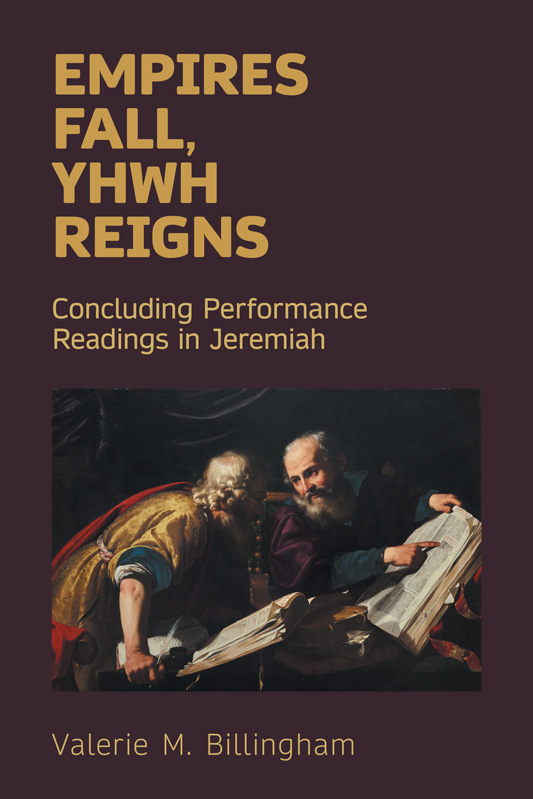
Empires Fall, Yhwh Reigns: Concluding Performance Readings in Jeremiah
Published: Oct 2025
Original price was: £80.00.£35.00Current price is: £35.00.
This work completes Billingham’s performance reading of selected passages in the book of Jeremiah, following two previous volumes: The Great Drama of Jeremiah: A Performance Reading and A Distraught Prophet and Other Performance Readings in Jeremiah. Employing her established methodology that includes rhetorical analyses of her own translations, she discusses ten scenes selected from Chaps. 34-52 according to their scripts, actors, audiences, settings, and improvisations of traditional narratives and customs. Ancient Near Eastern historical accounts are enlivened as they are viewed as dramas.
- In a life and death struggle between the word of Yhwh and the king, the scroll is read and burnt by King Jehoiakim. However, the divine word is indestructible as it is recomposed by Jeremiah and rewritten by Baruch to produce an enhanced version.
- During the Babylonian siege of Jerusalem, Jeremiah is incarcerated in various prisons. However, he is rescued from a dungeon by the Ethiopia eunuch Ebed Melech. The unexpected and unsolicited kindness he experiences provides a hopeful paradigm for Yhwh’s care for the exilic community.
- The Oracles against the Nations demonstrate Yhwh’s international power and covenantal commitment to Judah.
- In a sign-act Jeremiah ties Yhwh’s judgment oracle to a stone and flings it into the Euphrates River in the heart of Babylon. There, as a silent symbol, it awaits Yhwh’s fulfilment, providing hope for the captive Judeans.
- A tale of two kings and the toppling temple embody the dismantling of Judah’s royal-priestly support structures.
- The conclusion of the book remains open-ended, allowing for the possibilities of survival, return to Judah, and faith in God. While empires fall, Yhwh reigns.
Billingham’s set of performance readings in Jeremiah provide illuminating resources for students, teachers and clergy alike.
Sale
Empires Fall, Yhwh Reigns: Concluding Performance Readings in Jeremiah
Original price was: £80.00.£35.00Current price is: £35.00.
This work completes Billingham’s performance reading of selected passages in the book of Jeremiah, following two previous volumes: The Great Drama of Jeremiah: A Performance Reading and A Distraught Prophet and Other Performance Readings in Jeremiah. Employing her established methodology that includes rhetorical analyses of her own translations, she discusses ten scenes selected from Chaps. 34-52 according to their scripts, actors, audiences, settings, and improvisations of traditional narratives and customs. Ancient Near Eastern historical accounts are enlivened as they are viewed as dramas.
- In a life and death struggle between the word of Yhwh and the king, the scroll is read and burnt by King Jehoiakim. However, the divine word is indestructible as it is recomposed by Jeremiah and rewritten by Baruch to produce an enhanced version.
- During the Babylonian siege of Jerusalem, Jeremiah is incarcerated in various prisons. However, he is rescued from a dungeon by the Ethiopia eunuch Ebed Melech. The unexpected and unsolicited kindness he experiences provides a hopeful paradigm for Yhwh’s care for the exilic community.
- The Oracles against the Nations demonstrate Yhwh’s international power and covenantal commitment to Judah.
- In a sign-act Jeremiah ties Yhwh’s judgment oracle to a stone and flings it into the Euphrates River in the heart of Babylon. There, as a silent symbol, it awaits Yhwh’s fulfilment, providing hope for the captive Judeans.
- A tale of two kings and the toppling temple embody the dismantling of Judah’s royal-priestly support structures.
- The conclusion of the book remains open-ended, allowing for the possibilities of survival, return to Judah, and faith in God. While empires fall, Yhwh reigns.
Billingham’s set of performance readings in Jeremiah provide illuminating resources for students, teachers and clergy alike.
Sale
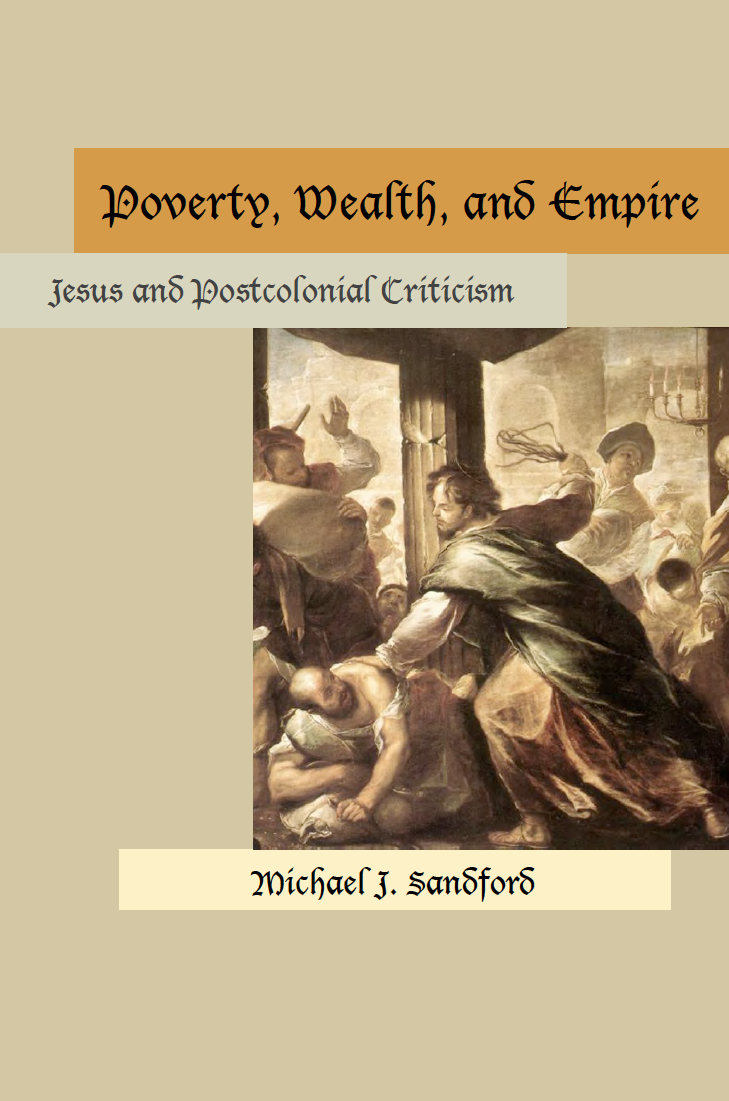
Poverty, Wealth, and Empire: Jesus and Postcolonial Criticism
Published: Mar 2014
Original price was: £45.00.£13.50Current price is: £13.50.
Poverty, Wealth, and Empire presents an antidote to the liberal Jesuses that are constantly being constructed by theologians and historians in universities and seminaries in the West. Sandford's programme is to pay attention to those texts where Jesus appears hostile to his audiences, or even invokes the idea of divine judgment and violence against certain groups. Drawing on a variety of texts in the synoptic gospels, Sandford finds violent denouncements of the rich and those who neglect the needy to be a consistent theme in Jesus' teaching.
Rather than deploying biblical texts to support an anti-imperial or liberationist agenda, Sandford foregrounds troubling and problematic texts. Among them are wisdom sayings that justify poverty, texts that denigrate particular ethnic groups, and the ideology inherent in Jesus' teachings about the 'the Kingdom of God'. On such a basis Sandford is able to call into question the effectiveness of mainline Christian scholarly interpretations of Jesus in dealing with the most profound ethical problems of our time: poverty, domination and violence.
Always alert to the assumptions and prejudices of much Western New Testament scholarship, Sandford draws attention to its intellectual contradictions, and, furthermore, to the way in which this scholarship has sometimes served to undergird and justify systems of oppression —in particular by its demonstrable dodging of the issue of material poverty and its causes. Building on recent debates in postcolonial biblical criticism, Sandford offers a decidedly 'illiberal' reading of Jesus' sayings on divine judgment, focusing on the paradoxical idea of a 'nonviolent' Jesus who nevertheless pronounces divine violence upon the rich.
Sale
Poverty, Wealth, and Empire: Jesus and Postcolonial Criticism
Original price was: £45.00.£13.50Current price is: £13.50.
Poverty, Wealth, and Empire presents an antidote to the liberal Jesuses that are constantly being constructed by theologians and historians in universities and seminaries in the West. Sandford's programme is to pay attention to those texts where Jesus appears hostile to his audiences, or even invokes the idea of divine judgment and violence against certain groups. Drawing on a variety of texts in the synoptic gospels, Sandford finds violent denouncements of the rich and those who neglect the needy to be a consistent theme in Jesus' teaching.
Rather than deploying biblical texts to support an anti-imperial or liberationist agenda, Sandford foregrounds troubling and problematic texts. Among them are wisdom sayings that justify poverty, texts that denigrate particular ethnic groups, and the ideology inherent in Jesus' teachings about the 'the Kingdom of God'. On such a basis Sandford is able to call into question the effectiveness of mainline Christian scholarly interpretations of Jesus in dealing with the most profound ethical problems of our time: poverty, domination and violence.
Always alert to the assumptions and prejudices of much Western New Testament scholarship, Sandford draws attention to its intellectual contradictions, and, furthermore, to the way in which this scholarship has sometimes served to undergird and justify systems of oppression —in particular by its demonstrable dodging of the issue of material poverty and its causes. Building on recent debates in postcolonial biblical criticism, Sandford offers a decidedly 'illiberal' reading of Jesus' sayings on divine judgment, focusing on the paradoxical idea of a 'nonviolent' Jesus who nevertheless pronounces divine violence upon the rich.
Sale

Mark, Women and Empire: A Korean Postcolonial Perspective
Published: Mar 2010
Original price was: £45.00.£19.50Current price is: £19.50.
As Mark's Gospel moves toward its climax, four stories of women challenge Jesus in his mission to establish the empire of God against the backdrop of the Roman Empire: those of the poor widow (12.41-44), the anointing woman (14.1-11), the women at the cross and the burial (15.40-41, 47), and the women at the empty tomb (16.1-8). They are stories that would seem to demand both a feminist and a postcolonial perspective on the part of their readers —yet Kim's is the first reading of the Gospel that has taken an explicitly postcolonial feminist stance.
In addition to the feminist and the postcolonial themes, the third strand in Seong Hee Kim's approach arises from her Korean context, which provides her with the concept of Salim interpretation, that is, 'making things alive'. Starting from the reader's context, she develops a Salim hermeneutics for each of the four stories by engaging in a dialogue between the biblical story and the reader's use of her or his own imagination. The goal of her interpretation is such a making things alive, a mending of broken things, and an opening up of meaning —in contrast to the tendency of historical criticism, which has striven to identify a single, correct meaning in the biblical text.
Sale
Mark, Women and Empire: A Korean Postcolonial Perspective
Original price was: £45.00.£19.50Current price is: £19.50.
As Mark's Gospel moves toward its climax, four stories of women challenge Jesus in his mission to establish the empire of God against the backdrop of the Roman Empire: those of the poor widow (12.41-44), the anointing woman (14.1-11), the women at the cross and the burial (15.40-41, 47), and the women at the empty tomb (16.1-8). They are stories that would seem to demand both a feminist and a postcolonial perspective on the part of their readers —yet Kim's is the first reading of the Gospel that has taken an explicitly postcolonial feminist stance.
In addition to the feminist and the postcolonial themes, the third strand in Seong Hee Kim's approach arises from her Korean context, which provides her with the concept of Salim interpretation, that is, 'making things alive'. Starting from the reader's context, she develops a Salim hermeneutics for each of the four stories by engaging in a dialogue between the biblical story and the reader's use of her or his own imagination. The goal of her interpretation is such a making things alive, a mending of broken things, and an opening up of meaning —in contrast to the tendency of historical criticism, which has striven to identify a single, correct meaning in the biblical text.
Sale
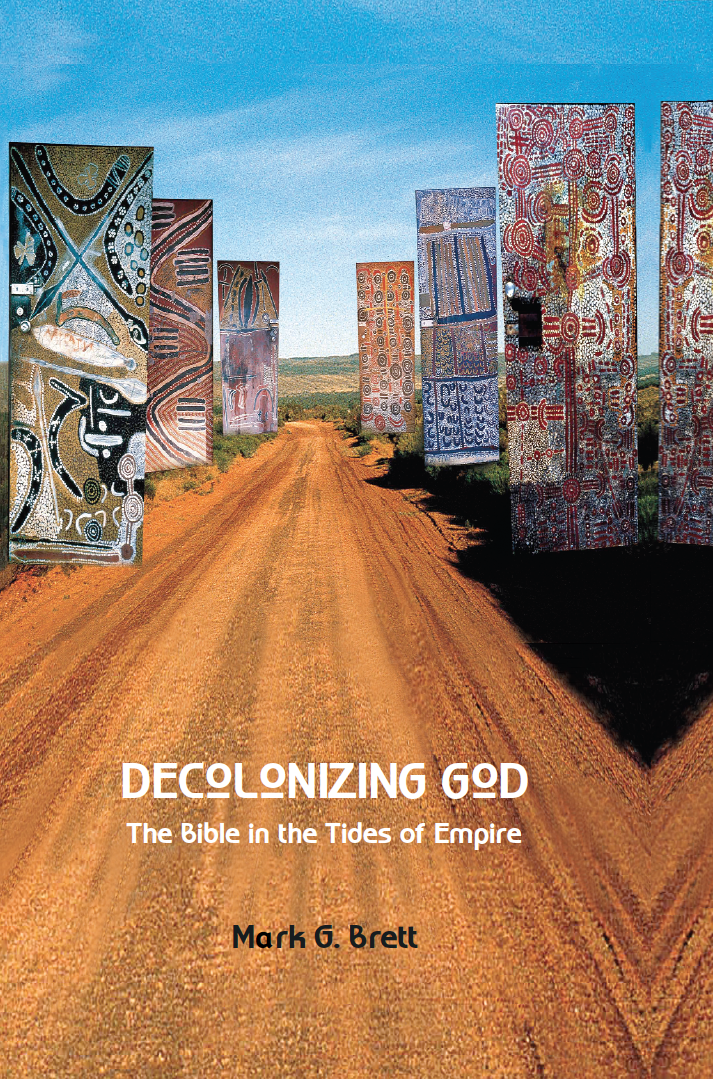
Decolonizing God: The Bible in the Tides of Empire
Published: Oct 2009
Price range: £22.00 through £30.00
For centuries, the Bible has been used by colonial powers to undergird their imperial designs--an ironic situation when so much of the Bible was conceived by way of resistance to empires. In this thoughtful book, Mark Brett draws upon his experience of the colonial heritage in Australia to identify a remarkable range of areas where God needs to be decolonized--freed from the bonds of the colonial.
Writing in a context where landmark legal cases have ruled that Indigenous (Aboriginal) rights have been 'washed away by the tide of history', Brett re-examines land rights in the biblical traditions, Deuteronomy's genocidal imagination, and other key topics in both the Hebrew Bible and the New Testament where the effects of colonialism can be traced. Drawing out the implications for theology and ethics, this book provides a comprehensive new proposal for addressing the legacies of colonialism.
Sale
Decolonizing God: The Bible in the Tides of Empire
Price range: £22.00 through £30.00
For centuries, the Bible has been used by colonial powers to undergird their imperial designs--an ironic situation when so much of the Bible was conceived by way of resistance to empires. In this thoughtful book, Mark Brett draws upon his experience of the colonial heritage in Australia to identify a remarkable range of areas where God needs to be decolonized--freed from the bonds of the colonial.
Writing in a context where landmark legal cases have ruled that Indigenous (Aboriginal) rights have been 'washed away by the tide of history', Brett re-examines land rights in the biblical traditions, Deuteronomy's genocidal imagination, and other key topics in both the Hebrew Bible and the New Testament where the effects of colonialism can be traced. Drawing out the implications for theology and ethics, this book provides a comprehensive new proposal for addressing the legacies of colonialism.
Sale

Empire and Apocalypse: Postcolonialism and the New Testament
Published: Oct 2006
Price range: £27.00 through £32.00
In Empire and Apocalypse Stephen Moore offers us the most complete introduction yet to the emergent field of postcolonial biblical criticism. It includes an indispensable in-depth introduction to postcolonial theory and criticism together with a detailed survey of postcolonial biblical criticism.
Next come three substantial exegetical chapters on the Gospels of Mark and John and the Book of Revelation, which together demonstrate how postcolonial studies provide fresh conceptual resources and critical strategies for rethinking early Christianity's complex relations to the Roman Empire. Each of these three texts, to different degrees, Moore argues, mimic and replicate fundamental facets of Roman imperial ideology even while resisting and eroding it.
The book concludes with an amply annotated bibliography whose main section provides a comprehensive listing of work done to date in postcolonial biblical criticism.
Sale
Empire and Apocalypse: Postcolonialism and the New Testament
Price range: £27.00 through £32.00
In Empire and Apocalypse Stephen Moore offers us the most complete introduction yet to the emergent field of postcolonial biblical criticism. It includes an indispensable in-depth introduction to postcolonial theory and criticism together with a detailed survey of postcolonial biblical criticism.
Next come three substantial exegetical chapters on the Gospels of Mark and John and the Book of Revelation, which together demonstrate how postcolonial studies provide fresh conceptual resources and critical strategies for rethinking early Christianity's complex relations to the Roman Empire. Each of these three texts, to different degrees, Moore argues, mimic and replicate fundamental facets of Roman imperial ideology even while resisting and eroding it.
The book concludes with an amply annotated bibliography whose main section provides a comprehensive listing of work done to date in postcolonial biblical criticism.
Sale

Sowing the Word: The Cultural Impact of the British and Foreign Bible Society 1804-2004
Published: Jun 2006
Price range: £17.50 through £18.50
In March 2004, a group of 30 historians who have been fascinated by the work of the British and Foreign Bible Society met in London to share their researches, in celebration of the 200th anniversary of the Society (now part of the United Bible Societies).
A common thread to their papers was the indelible effect the Society's work has had around the world, not only in bringing the Bible to people of many countries in their own language, but also in helping to create many national identities and cultures. The Bible was often the first printed book in a language, and so the primer for those learning to read. It had an enormous influence on education, the development of written languages, and the outlook of leaders and ordinary people alike throughout Europe, Asia and Africa.
In the 19 papers of this volume, focussing on Britain, West Africa, East Asia, Russia, Europe and North America, readers will find a wealth of absorbing detail. There are the stories of those who translated the Bible into the languages of China and Russia, into the native languages of nineteenth-century Canada, and into many other languages of the world. There are the intriguing tales of those who distributed Bibles, including the many women such as the Bible Women, who found a freedom they otherwise lacked in organizing networks for circulating the Scriptures.
Not forgotten either are those colourful characters, like the maverick George Borrow in Spain, who took enormous risks for the Society in selling Bibles in countries where a vernacular Bible was not welcomed by the authorities.
Sale
Sowing the Word: The Cultural Impact of the British and Foreign Bible Society 1804-2004
Price range: £17.50 through £18.50
In March 2004, a group of 30 historians who have been fascinated by the work of the British and Foreign Bible Society met in London to share their researches, in celebration of the 200th anniversary of the Society (now part of the United Bible Societies).
A common thread to their papers was the indelible effect the Society's work has had around the world, not only in bringing the Bible to people of many countries in their own language, but also in helping to create many national identities and cultures. The Bible was often the first printed book in a language, and so the primer for those learning to read. It had an enormous influence on education, the development of written languages, and the outlook of leaders and ordinary people alike throughout Europe, Asia and Africa.
In the 19 papers of this volume, focussing on Britain, West Africa, East Asia, Russia, Europe and North America, readers will find a wealth of absorbing detail. There are the stories of those who translated the Bible into the languages of China and Russia, into the native languages of nineteenth-century Canada, and into many other languages of the world. There are the intriguing tales of those who distributed Bibles, including the many women such as the Bible Women, who found a freedom they otherwise lacked in organizing networks for circulating the Scriptures.
Not forgotten either are those colourful characters, like the maverick George Borrow in Spain, who took enormous risks for the Society in selling Bibles in countries where a vernacular Bible was not welcomed by the authorities.