
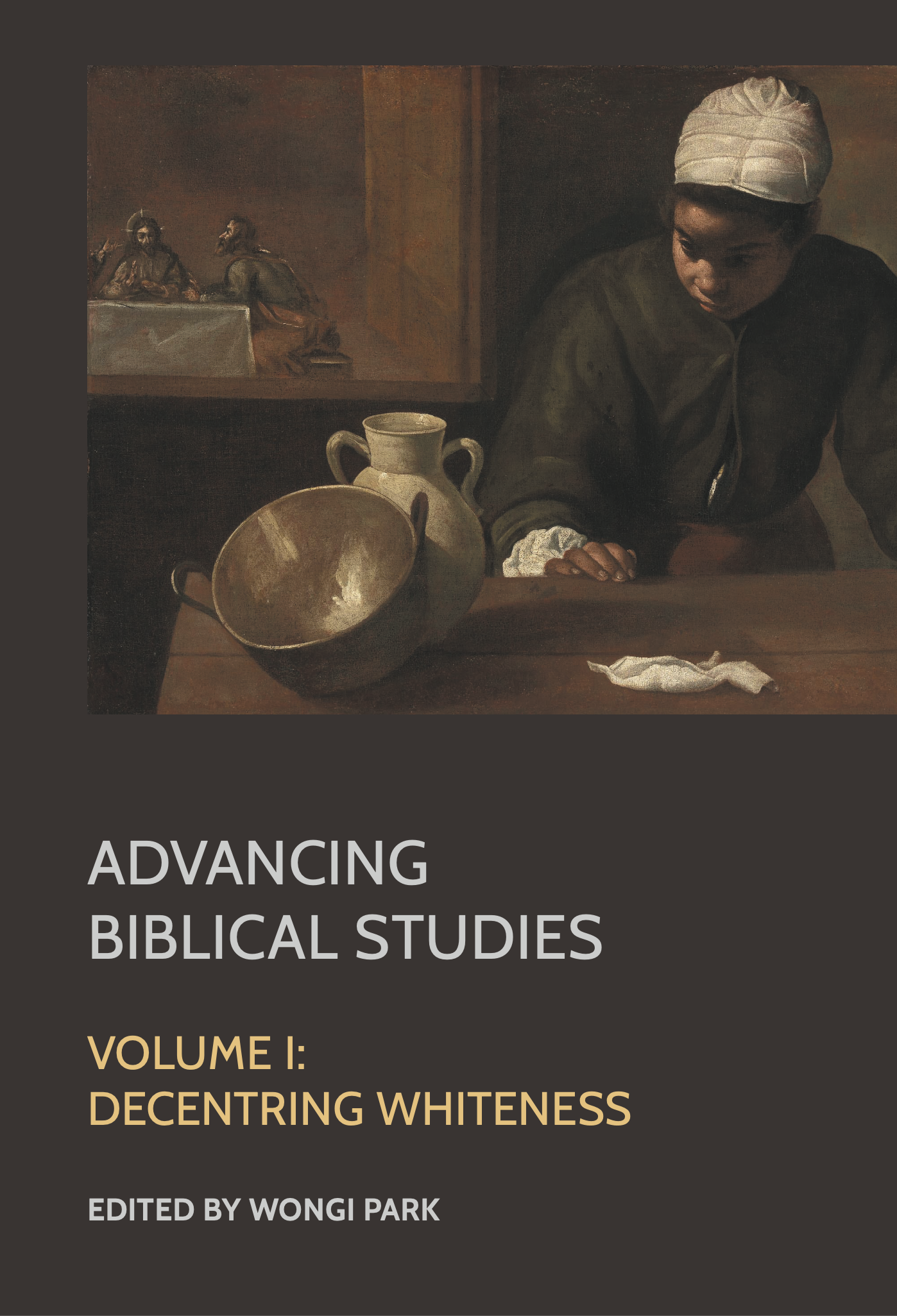
Advancing Biblical Studies: I. Decentring Whiteness
Published: Feb 2026
£90.00
The singular aim of this two-volume series is to advance biblical studies. Both volumes arise from a project initiated by the editor, Wongi Park, who asked invited contributors how to cultivate and sustain mutual dialogue, collaboration, and engagement across racial/ethnic, generational, and geographical boundaries?
The virtual convenings, held during the pandemic emergencies of 2020, led to a public-facing virtual symposium in 2022 where three critical tasks were undertaken:
- Decentre the monoracial history and methods of the field;
- Model a less traditional and hierarchical approach to biblical studies through dialogue and collaboration;
- Foreground a multiplicity of voices, perspectives, and starting points to diversify biblical studies.
Volume 1 pursues these aims of diagnosing the monoracial Eurocentrism of biblical studies by:
- Examining the problem of whiteness in the Eurocentric origins of the field;
- Reframing traditional methods, tools, and institutions of biblical studies;
- Tracing how whiteness is reproduced in texts, representations, and colonial legacies in biblical reception history.
A distinctive feature of this project is the radical act of gathering a multiracial coalition of Africana, Asian, Euro American, European, Indigenous, Islander, and Latinx scholars that models an alternative approach to biblical studies.
Volume 1 includes contributions in the following order: Wongi Park; Shawn Kelley; Susannah Heschel; M. Adrayael Tong; Luis Menéndez-Antuña; Hulisani Ramantswana; Joel Baden; Lisa J. Cleath; Halvor Moxnes; Ekaputra Tupamahu; Gerrie F. Snyman; Ludwig Beethoven J. Noya; Justin Michael Reed; Kenneth Ngwa; Greg Carey; Stephen D. Moore; Amy Lindeman Allen; Hannah M. Strømmen; Francisco Lozada Jr.
Advancing Biblical Studies: I. Decentring Whiteness
£90.00
The singular aim of this two-volume series is to advance biblical studies. Both volumes arise from a project initiated by the editor, Wongi Park, who asked invited contributors how to cultivate and sustain mutual dialogue, collaboration, and engagement across racial/ethnic, generational, and geographical boundaries?
The virtual convenings, held during the pandemic emergencies of 2020, led to a public-facing virtual symposium in 2022 where three critical tasks were undertaken:
- Decentre the monoracial history and methods of the field;
- Model a less traditional and hierarchical approach to biblical studies through dialogue and collaboration;
- Foreground a multiplicity of voices, perspectives, and starting points to diversify biblical studies.
Volume 1 pursues these aims of diagnosing the monoracial Eurocentrism of biblical studies by:
- Examining the problem of whiteness in the Eurocentric origins of the field;
- Reframing traditional methods, tools, and institutions of biblical studies;
- Tracing how whiteness is reproduced in texts, representations, and colonial legacies in biblical reception history.
A distinctive feature of this project is the radical act of gathering a multiracial coalition of Africana, Asian, Euro American, European, Indigenous, Islander, and Latinx scholars that models an alternative approach to biblical studies.
Volume 1 includes contributions in the following order: Wongi Park; Shawn Kelley; Susannah Heschel; M. Adrayael Tong; Luis Menéndez-Antuña; Hulisani Ramantswana; Joel Baden; Lisa J. Cleath; Halvor Moxnes; Ekaputra Tupamahu; Gerrie F. Snyman; Ludwig Beethoven J. Noya; Justin Michael Reed; Kenneth Ngwa; Greg Carey; Stephen D. Moore; Amy Lindeman Allen; Hannah M. Strømmen; Francisco Lozada Jr.
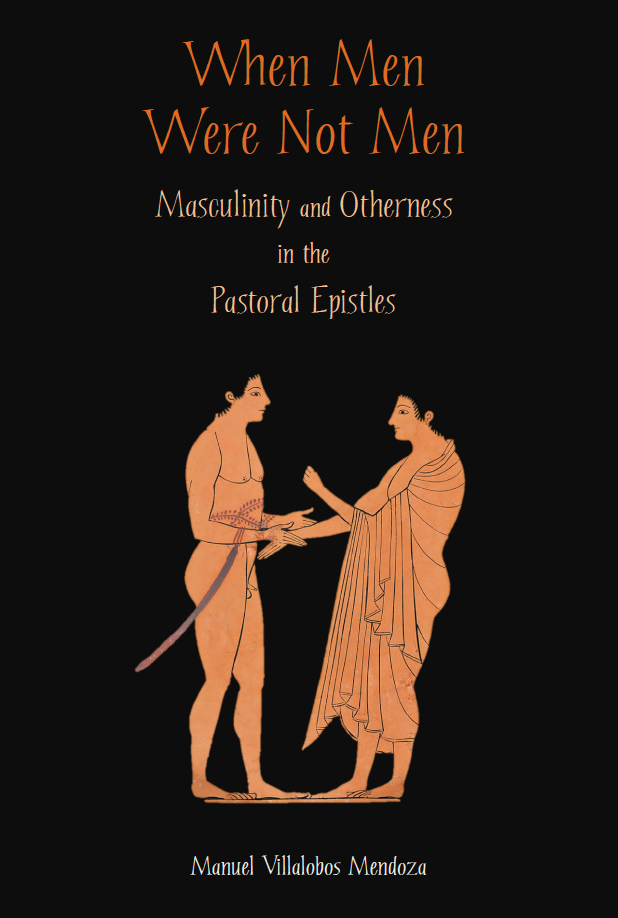
When Men Were Not Men: Masculinity and Otherness in the Pastoral Epistles
Published: Nov 2014
£50.00
We are almost never encouraged in contemporary exegesis of the Pastoral Epistles to take the side of those 'dubious' and 'deviant' characters against whom our biblical author sets himself. When Men Were Not Men: Masculinity and Otherness in the Pastoral Epistles dares to give voice to those 'others' as a way to challenge the Pastor's (and his allies) 'performance' of masculinity. By deliberately highlighting texts where issues of masculinity, gender, power, race, money, (ab)use of religion and otherness are present in the Pastoral Epistles, Villalobos meticulously gazes upon bodies that have been marked as other by the sexist, racist, and homophobic abuse of these texts.
Why does the author of the PE constantly situate the 'others' in the place where Satan reigns? Why does he constantly repeat that those 'others' have deviated so greatly from the Pastor's right teaching? Why is he so obsessed with presenting himself as the legitimate promoter of right teaching? Why is the Pastor so eager to maintain the hierarchical household that privileges male over female, free bodies over slaves, manly men over effeminate bodies?
These are some of the questions Villalobos addresses in When Men Were Not Men. He shows that all these questions have to do with issues of masculinity and the proper performance of being a 'real man'. He concludes that in fact no one even among the inner circle of the author's friends was a model of pure masculinity, and that they themselves not infrequently demonstrate the kinds of behaviour he himself inveighs against.
When Men Were Not Men: Masculinity and Otherness in the Pastoral Epistles
£50.00
We are almost never encouraged in contemporary exegesis of the Pastoral Epistles to take the side of those 'dubious' and 'deviant' characters against whom our biblical author sets himself. When Men Were Not Men: Masculinity and Otherness in the Pastoral Epistles dares to give voice to those 'others' as a way to challenge the Pastor's (and his allies) 'performance' of masculinity. By deliberately highlighting texts where issues of masculinity, gender, power, race, money, (ab)use of religion and otherness are present in the Pastoral Epistles, Villalobos meticulously gazes upon bodies that have been marked as other by the sexist, racist, and homophobic abuse of these texts.
Why does the author of the PE constantly situate the 'others' in the place where Satan reigns? Why does he constantly repeat that those 'others' have deviated so greatly from the Pastor's right teaching? Why is he so obsessed with presenting himself as the legitimate promoter of right teaching? Why is the Pastor so eager to maintain the hierarchical household that privileges male over female, free bodies over slaves, manly men over effeminate bodies?
These are some of the questions Villalobos addresses in When Men Were Not Men. He shows that all these questions have to do with issues of masculinity and the proper performance of being a 'real man'. He concludes that in fact no one even among the inner circle of the author's friends was a model of pure masculinity, and that they themselves not infrequently demonstrate the kinds of behaviour he himself inveighs against.