
Feminist Interpretation of the Hebrew Bible in Retrospect. III: Methods
Published: Oct 2017
Price range: £25.00 through £60.00
This is the third of a set of three volumes reviewing the progress of feminist Hebrew Bible scholarship over the last forty years. In this third volume, eighteen contributors focus on the wide range of exegetical methods as they have been productively employed in feminist biblical interpretations.
More specifically, each essay investigates how feminist Hebrew Bible exegetes have worked with exegetical methods. Each essay surveys the method under consideration as it has emerged in academic discourse generally and in biblical studies in particular. Each essay also explains how feminist uses of the various exegetical methods have been deeply embedded within the theological, cultural, and even political expectations and assumptions of readers of the Bible.
This volume asks readers to come to terms with the following question: What are the best methods for feminist exegesis in the light of past and present socio-political, theological, or hermeneutical developments in reading the Bible? After all, feminist theorists have come to recognize that methods are always already situated within powerful epistemological and methodological structures that have their roots in vast arrays of historical, political, economic, social, and religious factors. This volume encourages feminist debate on these complex issues that stand at the heart of biblical exegesis.
Feminist Interpretation of the Hebrew Bible in Retrospect. III: Methods
Price range: £25.00 through £60.00
This is the third of a set of three volumes reviewing the progress of feminist Hebrew Bible scholarship over the last forty years. In this third volume, eighteen contributors focus on the wide range of exegetical methods as they have been productively employed in feminist biblical interpretations.
More specifically, each essay investigates how feminist Hebrew Bible exegetes have worked with exegetical methods. Each essay surveys the method under consideration as it has emerged in academic discourse generally and in biblical studies in particular. Each essay also explains how feminist uses of the various exegetical methods have been deeply embedded within the theological, cultural, and even political expectations and assumptions of readers of the Bible.
This volume asks readers to come to terms with the following question: What are the best methods for feminist exegesis in the light of past and present socio-political, theological, or hermeneutical developments in reading the Bible? After all, feminist theorists have come to recognize that methods are always already situated within powerful epistemological and methodological structures that have their roots in vast arrays of historical, political, economic, social, and religious factors. This volume encourages feminist debate on these complex issues that stand at the heart of biblical exegesis.
Biblical Masculinities Foregrounded
Published: Oct 2017
Price range: £25.00 through £65.00
Biblical Masculinities Foregrounded brings together ten innovative studies on varieties of masculinity evidenced in the Hebrew Bible, the New Testament and other early Christian writings. A sequel to the 2010 collection, Men and Masculinity in the Hebrew Bible and Beyond, this new volume raises important questions about why the study of biblical masculinities matters, what it contributes to our knowledge of the ancient writers' world as well as to our contemporary world, and which methods adequately attend to that study. The volume is designed as a resource for scholars of both Testaments working from a variety of biblical traditions and ideological perspectives on masculinity.
The following studies are offered as companions in the conversation: Yahweh's masculinity in appearances in glory in Exodus and Ezekiel (Alan Hooker); Proverbs' (de)construction of masculinity (Hilary Lipka); Saul's troubled masculinity in 1 —2 Samuel (Marcel M€Äcelaru); weeping men in the Torah and the Deuteronomistic history (Milena Kirova); Athaliah's manly rule (Stuart Macwilliam); Joseph of Nazareth as an everyday man (Justin Glessner); being a male disciple in Matthew's 'antitheses' (Hans-Ulrich Weidemann); eunuch masculinity in Matthew's Gospel (Susanna Asikainen); masculinity and circumcision in the first century (Karin Neutel and Matthew Anderson); and Thecla's masculinity in the Acts of Thecla (Peter-Ben Smit). Ovidiu Creangă opens the volume with a critical appraisal of the current state of play in the field, while Martti Nissinen and Bjorn Krondorfer offer closing critical reflections that situate the book's topics within broader debates regarding masculinities in religious studies.
Biblical Masculinities Foregrounded
Price range: £25.00 through £65.00
Biblical Masculinities Foregrounded brings together ten innovative studies on varieties of masculinity evidenced in the Hebrew Bible, the New Testament and other early Christian writings. A sequel to the 2010 collection, Men and Masculinity in the Hebrew Bible and Beyond, this new volume raises important questions about why the study of biblical masculinities matters, what it contributes to our knowledge of the ancient writers' world as well as to our contemporary world, and which methods adequately attend to that study. The volume is designed as a resource for scholars of both Testaments working from a variety of biblical traditions and ideological perspectives on masculinity.
The following studies are offered as companions in the conversation: Yahweh's masculinity in appearances in glory in Exodus and Ezekiel (Alan Hooker); Proverbs' (de)construction of masculinity (Hilary Lipka); Saul's troubled masculinity in 1 —2 Samuel (Marcel M€Äcelaru); weeping men in the Torah and the Deuteronomistic history (Milena Kirova); Athaliah's manly rule (Stuart Macwilliam); Joseph of Nazareth as an everyday man (Justin Glessner); being a male disciple in Matthew's 'antitheses' (Hans-Ulrich Weidemann); eunuch masculinity in Matthew's Gospel (Susanna Asikainen); masculinity and circumcision in the first century (Karin Neutel and Matthew Anderson); and Thecla's masculinity in the Acts of Thecla (Peter-Ben Smit). Ovidiu Creangă opens the volume with a critical appraisal of the current state of play in the field, while Martti Nissinen and Bjorn Krondorfer offer closing critical reflections that situate the book's topics within broader debates regarding masculinities in religious studies.
The Female Ruse: Women’s Deception and Divine Sanction in the Hebrew Bible
Published: Sep 2017
Price range: £25.00 through £60.00
From Eve to Esther, the Hebrew Bible is replete with gendered tales of trickery. A lie is uttered, a mask donned, a seduction staged, while redemption is propelled forward, guided by the divine hand. From the first 'female ruse' — Eve presenting the fruit of the tree of knowledge to Adam — humanity becomes embodied, engaged in history, moving from the Garden to exile, from wandering to homeland and redemption (and back again). Consider Rebekah dressing her beloved son in goatskins to steal the blessing from his blind father; Lot's daughters lying with their drunken father, and then conceiving the founding fathers of Ammon and Moab; Leah and Rachel, the mothers of the twelve tribes of Israel, duping Jacob on their wedding night; Tamar's seduction of Judah, her father-in-law, who then bears the progenitor of the Davidic line; Naomi sending Ruth to the threshing floor to seduce Boaz by night; Bathsheba invoking an oath that King David had supposedly made in order to forward Solomon, her son, as successor to the monarchy; and Queen Esther concealing her Jewish identity in the Persian imperial court. Over the course of nine chapters, the author traces these narratives of deception; in each case, God is in cahoots with these feminine agents in advancing the providential plan. A tension holds between the 'best laid plans' of men and the divine will as forwarded by women. Drawing on classic rabbinic sources and modern literary exegesis, the author exposes the conflict between the simple progression of genealogies and the process of selection through alliances of family and kin. Women are at the crux of that conflict, seemingly compelled to choose the indirect route while the deity appears to endorse their lie.
The Female Ruse: Women’s Deception and Divine Sanction in the Hebrew Bible
Price range: £25.00 through £60.00
From Eve to Esther, the Hebrew Bible is replete with gendered tales of trickery. A lie is uttered, a mask donned, a seduction staged, while redemption is propelled forward, guided by the divine hand. From the first 'female ruse' — Eve presenting the fruit of the tree of knowledge to Adam — humanity becomes embodied, engaged in history, moving from the Garden to exile, from wandering to homeland and redemption (and back again). Consider Rebekah dressing her beloved son in goatskins to steal the blessing from his blind father; Lot's daughters lying with their drunken father, and then conceiving the founding fathers of Ammon and Moab; Leah and Rachel, the mothers of the twelve tribes of Israel, duping Jacob on their wedding night; Tamar's seduction of Judah, her father-in-law, who then bears the progenitor of the Davidic line; Naomi sending Ruth to the threshing floor to seduce Boaz by night; Bathsheba invoking an oath that King David had supposedly made in order to forward Solomon, her son, as successor to the monarchy; and Queen Esther concealing her Jewish identity in the Persian imperial court. Over the course of nine chapters, the author traces these narratives of deception; in each case, God is in cahoots with these feminine agents in advancing the providential plan. A tension holds between the 'best laid plans' of men and the divine will as forwarded by women. Drawing on classic rabbinic sources and modern literary exegesis, the author exposes the conflict between the simple progression of genealogies and the process of selection through alliances of family and kin. Women are at the crux of that conflict, seemingly compelled to choose the indirect route while the deity appears to endorse their lie.
Journeys in the Songscape: Space and the Song of Songs
Published: Sep 2017
Price range: £20.00 through £60.00
The poetic world of the Song of Songs is a famously heady and distortive landscape, filled with bright sunlit rills, nocturnal cityscapes, and fecund bodies laid out like kingdoms. But what does the Song's use and abuse of spatial relationships tell us about its subject matter, and what do its strange panoramas tell us about literary space more broadly? Directly challenging recent methodological trends in biblical spatial studies, Journeys in the Songscape uses a range of innovative critical tools to explore, map and critique poetic space in the Song of Songs.
Taking the reader on a series of journeys across the Song's gendered, rural, urban and bodily spaces, Meredith argues that the worlds that spring up between the Song's lovers are all subtle reimaginings of the space between the biblical page and its own readers, and that at the heart of the Song is a (con)fusion of the dynamics of loving with the experience of reading. Love is at work in the Song, says Meredith, but it is not its subject so much as a sign under which collusions of power, textuality, space and subjectivity labour. The Song's world speaks not only to sexual relationships, then, but to the structure of language itself; textual spaces do not organize textual meaning but rather image its fundamental instability.
Journeys in the Songscape is a bold new literary treatment of the Song of Songs, but it is also a rethinking of what we mean by the term 'literary space', and represents a playful incitement to reconsider how critical tools are put to use in apprehending space as a literary construct.
Journeys in the Songscape: Space and the Song of Songs
Price range: £20.00 through £60.00
The poetic world of the Song of Songs is a famously heady and distortive landscape, filled with bright sunlit rills, nocturnal cityscapes, and fecund bodies laid out like kingdoms. But what does the Song's use and abuse of spatial relationships tell us about its subject matter, and what do its strange panoramas tell us about literary space more broadly? Directly challenging recent methodological trends in biblical spatial studies, Journeys in the Songscape uses a range of innovative critical tools to explore, map and critique poetic space in the Song of Songs.
Taking the reader on a series of journeys across the Song's gendered, rural, urban and bodily spaces, Meredith argues that the worlds that spring up between the Song's lovers are all subtle reimaginings of the space between the biblical page and its own readers, and that at the heart of the Song is a (con)fusion of the dynamics of loving with the experience of reading. Love is at work in the Song, says Meredith, but it is not its subject so much as a sign under which collusions of power, textuality, space and subjectivity labour. The Song's world speaks not only to sexual relationships, then, but to the structure of language itself; textual spaces do not organize textual meaning but rather image its fundamental instability.
Journeys in the Songscape is a bold new literary treatment of the Song of Songs, but it is also a rethinking of what we mean by the term 'literary space', and represents a playful incitement to reconsider how critical tools are put to use in apprehending space as a literary construct.
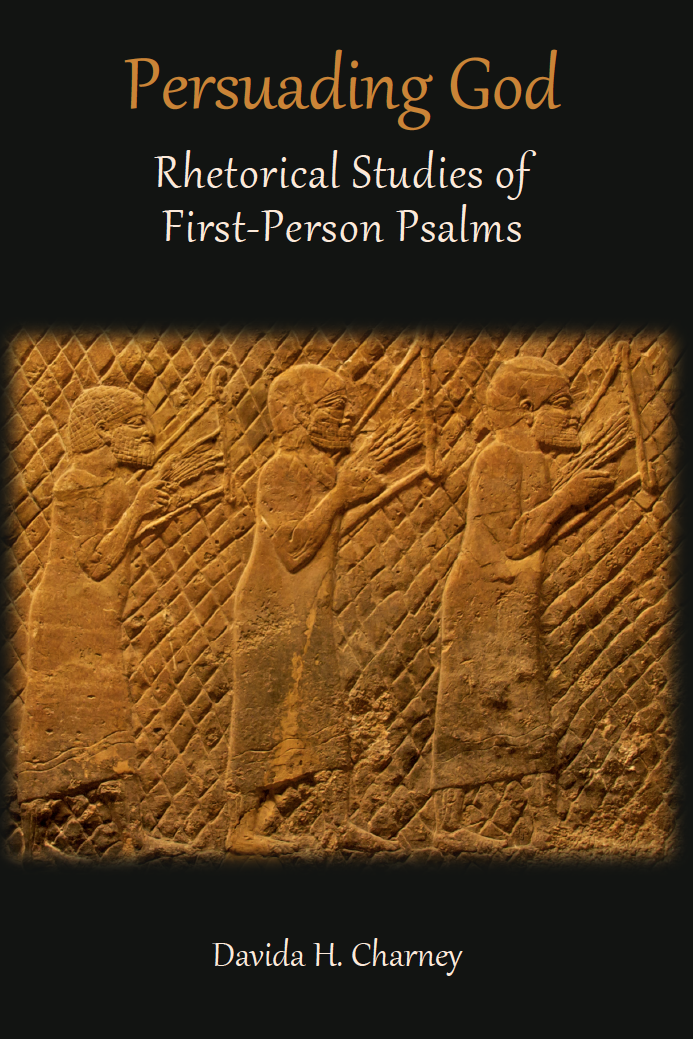
Persuading God: Rhetorical Studies of First-Person Psalms
Published: Sep 2017
Price range: £19.00 through £45.00
Written by a scholar of rhetoric, Persuading God demonstrates that the first-person psalms that make up over a third of the Book of Psalms were designed not simply to express the feelings of individual Israelites but to persuade God to act.
The book casts a new light on the roles of all the players in the situations in which the psalms were composed and performed: the person represented by the speaker on whose particular troubles the psalm is based, the spectators and opponents who are sometimes addressed directly by the speaker, the poet-musicians who craft the speaker's case and occasionally undermine it, and most of all, God as the direct addressee whose presumed openness to persuasion and willingness to intervene underlie the entire event.
The readings provide new explanations for many long-standing puzzles: how to deal with the long string of imprecations in Psalm 109, whether Psalm 4 is best read as protesting a false accusation or as countering apostasy, why so many verses in Psalm 62 begin with the exclamation ach , and, more generally, why so many first-person psalms seem to swing abruptly between despair and praise.
The book demonstrates the relevance of contemporary rhetorical theory to Hebrew Bible studies, including the work of ChaÌøm Perelman and Lucie Olbrechts-Tyteca, Kenneth Burke, and Mikhail Bakhtin. It also illuminates the state of rhetorical practice in the ancient Near East at the same time that rhetorical theories were first being codified and taught in archaic and classical Athens.
Persuading God: Rhetorical Studies of First-Person Psalms
Price range: £19.00 through £45.00
Written by a scholar of rhetoric, Persuading God demonstrates that the first-person psalms that make up over a third of the Book of Psalms were designed not simply to express the feelings of individual Israelites but to persuade God to act.
The book casts a new light on the roles of all the players in the situations in which the psalms were composed and performed: the person represented by the speaker on whose particular troubles the psalm is based, the spectators and opponents who are sometimes addressed directly by the speaker, the poet-musicians who craft the speaker's case and occasionally undermine it, and most of all, God as the direct addressee whose presumed openness to persuasion and willingness to intervene underlie the entire event.
The readings provide new explanations for many long-standing puzzles: how to deal with the long string of imprecations in Psalm 109, whether Psalm 4 is best read as protesting a false accusation or as countering apostasy, why so many verses in Psalm 62 begin with the exclamation ach , and, more generally, why so many first-person psalms seem to swing abruptly between despair and praise.
The book demonstrates the relevance of contemporary rhetorical theory to Hebrew Bible studies, including the work of ChaÌøm Perelman and Lucie Olbrechts-Tyteca, Kenneth Burke, and Mikhail Bakhtin. It also illuminates the state of rhetorical practice in the ancient Near East at the same time that rhetorical theories were first being codified and taught in archaic and classical Athens.
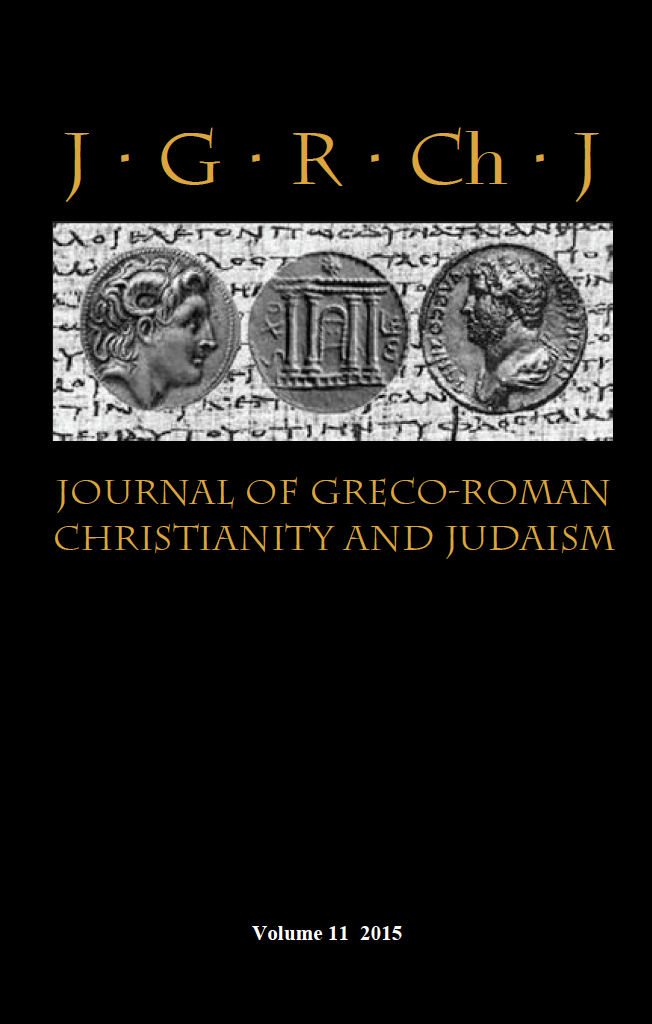
Journal of Greco-Roman Christianity and Judaism 11 (2015)
Published: Aug 2016
£80.00
This is the eleventh volume of the hard-copy edition of a journal that has been published online (www.jgrchj.net) since 2000. Volume 1 was for 2000, Volume 2 was for 2001 —2005, Volume 3 was for 2006, Volume 4 was for 2007, Volume 5 was for 2008, Volume 6 was for 2009, Volume 7 was for 2010, Volume 8 was for 2011 —2012, Volume 9 was for 2013, Volume 10 was for 2014 and Volume 11 is for 2015. As they appear, the hard-copy editions will replace the online materials.
The scope of JGRChJ is the texts, language and cultures of the Greco-Roman world of early Christianity and Judaism. The papers published in JGRChJ are designed to pay special attention to the 'larger picture' of politics, culture, religion and language, engaging as well with modern theoretical approaches.
Journal of Greco-Roman Christianity and Judaism 11 (2015)
£80.00
This is the eleventh volume of the hard-copy edition of a journal that has been published online (www.jgrchj.net) since 2000. Volume 1 was for 2000, Volume 2 was for 2001 —2005, Volume 3 was for 2006, Volume 4 was for 2007, Volume 5 was for 2008, Volume 6 was for 2009, Volume 7 was for 2010, Volume 8 was for 2011 —2012, Volume 9 was for 2013, Volume 10 was for 2014 and Volume 11 is for 2015. As they appear, the hard-copy editions will replace the online materials.
The scope of JGRChJ is the texts, language and cultures of the Greco-Roman world of early Christianity and Judaism. The papers published in JGRChJ are designed to pay special attention to the 'larger picture' of politics, culture, religion and language, engaging as well with modern theoretical approaches.

Obadiah
Published: July 2016
Price range: £15.00 through £35.00
Although Obadiah is the smallest book in the Hebrew Bible, its readers are confronted with a variety of challenges —linguistic, historical and hermeneutical. In the present volume the Book of Obadiah is approached from a variety of angles and reading strategies. These approaches sometimes concur, but often contradict one another.
Bob Becking discusses various grammatical and linguistic problems of the Hebrew text in translating the book for a post-secular audience. Historical questions are the province of Nadav Na'aman. What were the 'events' with which the text seems to cope? Literary-historical issues concern Marvin Sweeney, who sees the book as the end-result of a complex redaction history in which the text was read in connection with and confrontation to the other Minor Prophets.
Reading from particular positions is the theme of Gerrie Snyman, approaching the book in a South-African context, and asking, Who is vulnerable and who is not? Julia O'Brien takes a gender-specific approach asking, What does it mean that Edom is a brother who breaks the family code? Eric Ottenheijm traces the ways in which the Rabbis understood Obadiah.
With insights from newly developing fields, Nicholas Werse discusses the violent character of judgment in the book in the light of semiotics, and Bradford Anderson brings to the fore the spatial rhetoric in the book.
The authors of this volume offer their readings of the text in a non-exclusive way. No one claims to have found the one and only way to appreciate the message of the prophetic book. It is up to the readers of this volume —and of the Book of Obadiah —to decide how they will read the book in the changing circumstances of life.
Obadiah
Price range: £15.00 through £35.00
Although Obadiah is the smallest book in the Hebrew Bible, its readers are confronted with a variety of challenges —linguistic, historical and hermeneutical. In the present volume the Book of Obadiah is approached from a variety of angles and reading strategies. These approaches sometimes concur, but often contradict one another.
Bob Becking discusses various grammatical and linguistic problems of the Hebrew text in translating the book for a post-secular audience. Historical questions are the province of Nadav Na'aman. What were the 'events' with which the text seems to cope? Literary-historical issues concern Marvin Sweeney, who sees the book as the end-result of a complex redaction history in which the text was read in connection with and confrontation to the other Minor Prophets.
Reading from particular positions is the theme of Gerrie Snyman, approaching the book in a South-African context, and asking, Who is vulnerable and who is not? Julia O'Brien takes a gender-specific approach asking, What does it mean that Edom is a brother who breaks the family code? Eric Ottenheijm traces the ways in which the Rabbis understood Obadiah.
With insights from newly developing fields, Nicholas Werse discusses the violent character of judgment in the book in the light of semiotics, and Bradford Anderson brings to the fore the spatial rhetoric in the book.
The authors of this volume offer their readings of the text in a non-exclusive way. No one claims to have found the one and only way to appreciate the message of the prophetic book. It is up to the readers of this volume —and of the Book of Obadiah —to decide how they will read the book in the changing circumstances of life.
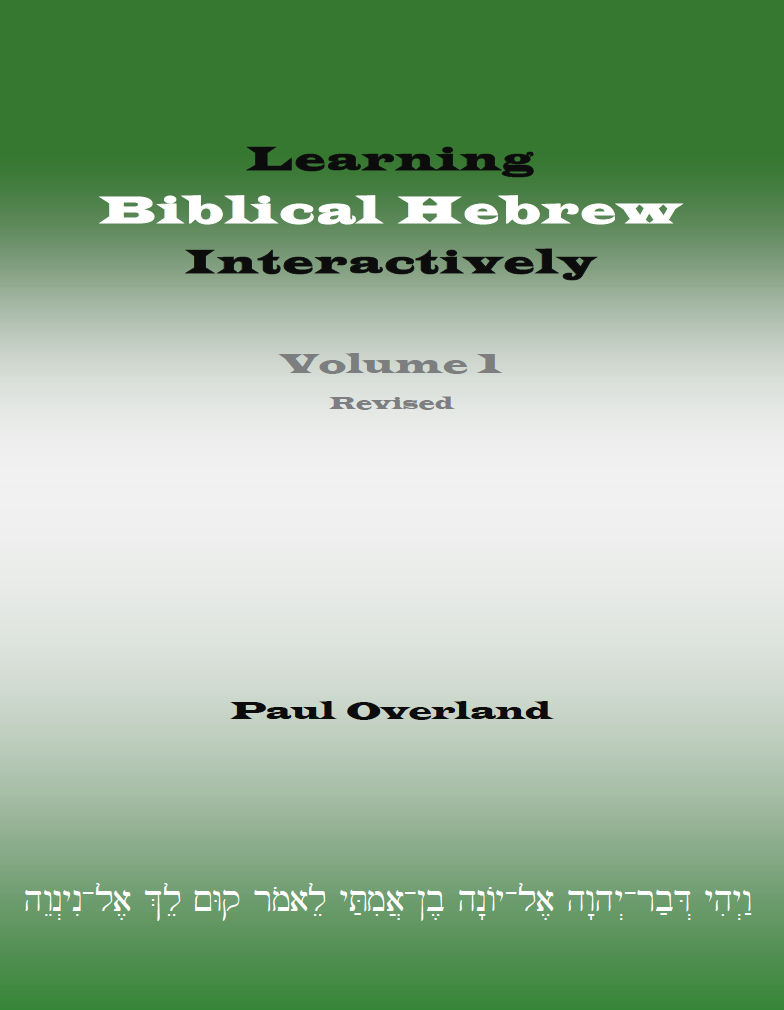
Learning Biblical Hebrew Interactively, I (Student Edition, Revised)
Published: July 2016
Price range: £26.00 through £40.00
The fruit of several years' research and development, field-tested by teachers without experience of conversation in Hebrew as a spoken language, Paul Overland's new Hebrew textbook is startlingly original and immediately accessible and attractive. Its foundation is the theory and practice of Second Language Acquisition (SLA), which orients grammar so as to empower the student's capacity for reading, hearing and expressing in Biblical Hebrew.
Learning Biblical Hebrew Interactively offers a set of activities structured on a serialized narrative inspired by the book of Jonah. Working through it, the student acquires facility in communicating in Hebrew by expressing opinions, accomplishing tasks, or asking others to do something. It is a hands-on, interactive learning experience, hugely various, enhanced by its 230 illustrations and photos, and numerous inserts headed 'Did you know that...?' featuring interesting aspects of Hebrew culture.
There are two volumes, which can be bought separately, and a version of the student edition that is designed for the instructor, with hints on how to use the textbook in a class setting.
Each lesson in the textbook is enhanced by digital resources, freely downloadable from LearningBiblicalHebrewInteractively.com.
Learning Biblical Hebrew Interactively, I (Student Edition, Revised)
Price range: £26.00 through £40.00
The fruit of several years' research and development, field-tested by teachers without experience of conversation in Hebrew as a spoken language, Paul Overland's new Hebrew textbook is startlingly original and immediately accessible and attractive. Its foundation is the theory and practice of Second Language Acquisition (SLA), which orients grammar so as to empower the student's capacity for reading, hearing and expressing in Biblical Hebrew.
Learning Biblical Hebrew Interactively offers a set of activities structured on a serialized narrative inspired by the book of Jonah. Working through it, the student acquires facility in communicating in Hebrew by expressing opinions, accomplishing tasks, or asking others to do something. It is a hands-on, interactive learning experience, hugely various, enhanced by its 230 illustrations and photos, and numerous inserts headed 'Did you know that...?' featuring interesting aspects of Hebrew culture.
There are two volumes, which can be bought separately, and a version of the student edition that is designed for the instructor, with hints on how to use the textbook in a class setting.
Each lesson in the textbook is enhanced by digital resources, freely downloadable from LearningBiblicalHebrewInteractively.com.

The Dictionary of Classical Hebrew, Volumes 1-9 Hardback
Published: Jun 2016
Price range: £50.00 through £150.00
The Dictionary of Classical Hebrew is a completely new and innovative dictionary.
Unlike previous dictionaries, which have been dictionaries of biblical Hebrew, this is the first dictionary of the classical Hebrew language to include the Bible, Dead Sea Scrolls, and all the other known Hebrew inscriptions and manuscripts.
This Dictionary covers the period from the earliest times to 200 CE. It lists and analyses every occurrences of each Hebrew word that occurs in texts of that period, with an English translation of every Hebrew word and phrase cited.
Among its special features are: a list of the non-biblical texts cited (especially the Dead Sea Scrolls), a word frequency index for each letter of the alphabet, a substantial bibliography (from Volume 2 onward) and an English-Hebrew index in each volume.
The Dictionary of Classical Hebrew, Volumes 1-9 Hardback
Price range: £50.00 through £150.00
The Dictionary of Classical Hebrew is a completely new and innovative dictionary.
Unlike previous dictionaries, which have been dictionaries of biblical Hebrew, this is the first dictionary of the classical Hebrew language to include the Bible, Dead Sea Scrolls, and all the other known Hebrew inscriptions and manuscripts.
This Dictionary covers the period from the earliest times to 200 CE. It lists and analyses every occurrences of each Hebrew word that occurs in texts of that period, with an English translation of every Hebrew word and phrase cited.
Among its special features are: a list of the non-biblical texts cited (especially the Dead Sea Scrolls), a word frequency index for each letter of the alphabet, a substantial bibliography (from Volume 2 onward) and an English-Hebrew index in each volume.
The Dictionary of Classical Hebrew, Volume 9: Index
Published: May 2016
Price range: £50.00 through £150.00
Volume IX offers a valuable enhancement of the 8-volume Dictionary of Classical Hebrew (1993 —2011). In DCH I —VIII, each volume had its own English —Hebrew Index, but this volume presents a much improved gathering together of all those indexes. The Index here contains every word used as a translation (gloss) in the Dictionary, that is, all the words printed in bold. In addition —a feature not seen before in Hebrew dictionaries —beneath each listed word are noted all the Hebrew words it translates, together with the volume and page reference of the relevant article.
The Index thus shows at a glance all the Hebrew words that are translated with the same English word, e.g. Arrogance 10 Hebrew words, Arrow 7, Assembly 10, Band 9, Basket 9, Bend 10, Branch 23, Break 21. So it becomes an index of synonyms, hard to parallel elsewhere in the scholarly literature.
Indexes have not been a common feature of twentieth-century Hebrew dictionaries, though they were quite frequent in older lexica, and it is time they were restored as a customary element in a lexicon. Browsing the Index will prove not only interesting but also useful.
The second element in this volume is the Word Frequency Table. This is a combination of the Word Frequency Tables in the various volumes of DCH . There, the lists of word frequencies were arranged under each letter of the alphabet. In the present publication, all the words in the Dictionary are combined in a single list arranged in order of frequency of occurrence.
Unlike all previous lists of occurrences of Hebrew words, the present list includes the occurrences not only in the Hebrew Bible but also in the whole scope of The Dictionary of Classical Hebrew, which is to say, Sirach (Ecclesiasticus), the Dead Sea Scrolls and the Hebrew Inscriptions as well as the Hebrew Bible itself. For each word there is listed the number of occurrences in each of those four corpora, and the ranking position of a given word is determined by the total number of occurrences in all the classical Hebrew texts combined. For some sample pages of this Volume, click The Dictionary of Classical Hebrew, IX . See also The Concise Dictionary of Classical Hebrew, a one-volume version of The Dictionary of Classical Hebrew.
The Dictionary of Classical Hebrew, Volume 9: Index
Price range: £50.00 through £150.00
Volume IX offers a valuable enhancement of the 8-volume Dictionary of Classical Hebrew (1993 —2011). In DCH I —VIII, each volume had its own English —Hebrew Index, but this volume presents a much improved gathering together of all those indexes. The Index here contains every word used as a translation (gloss) in the Dictionary, that is, all the words printed in bold. In addition —a feature not seen before in Hebrew dictionaries —beneath each listed word are noted all the Hebrew words it translates, together with the volume and page reference of the relevant article.
The Index thus shows at a glance all the Hebrew words that are translated with the same English word, e.g. Arrogance 10 Hebrew words, Arrow 7, Assembly 10, Band 9, Basket 9, Bend 10, Branch 23, Break 21. So it becomes an index of synonyms, hard to parallel elsewhere in the scholarly literature.
Indexes have not been a common feature of twentieth-century Hebrew dictionaries, though they were quite frequent in older lexica, and it is time they were restored as a customary element in a lexicon. Browsing the Index will prove not only interesting but also useful.
The second element in this volume is the Word Frequency Table. This is a combination of the Word Frequency Tables in the various volumes of DCH . There, the lists of word frequencies were arranged under each letter of the alphabet. In the present publication, all the words in the Dictionary are combined in a single list arranged in order of frequency of occurrence.
Unlike all previous lists of occurrences of Hebrew words, the present list includes the occurrences not only in the Hebrew Bible but also in the whole scope of The Dictionary of Classical Hebrew, which is to say, Sirach (Ecclesiasticus), the Dead Sea Scrolls and the Hebrew Inscriptions as well as the Hebrew Bible itself. For each word there is listed the number of occurrences in each of those four corpora, and the ranking position of a given word is determined by the total number of occurrences in all the classical Hebrew texts combined. For some sample pages of this Volume, click The Dictionary of Classical Hebrew, IX . See also The Concise Dictionary of Classical Hebrew, a one-volume version of The Dictionary of Classical Hebrew.
Megilloth Studies: The Shape of Contemporary Scholarship
Published: Feb 2016
£60.00
This volume brings together two years of papers read to the Megilloth Consultation Group at the Annual Meetings of the Society of Biblical Literature; it represents some of the most recent work being done by a group of international scholars on the collection of Hebrew Bible books known as the Megilloth.
Although the individual books of the Megilloth have received ample academic attention in contemporary scholarship, relatively little has been done to situate them under this broader rubric. To this end, the present volume addresses a range of issues associated with studying the five scrolls, such as the internal relationship between the books themselves, intertextual connections between the five scrolls and other portions of the Hebrew Bible, gender and ethnic concerns in the five scrolls, and the theological commitments and contours of the collection. Several of the papers and the volume itself also intentionally wrestle with the viability of the category 'Megilloth' as a meaningful term in academic studies of these writings.
In addition to papers on the Megilloth in general (Galvin, Stone, Fullerton Strollo), there are studies on Esther (Davis, Greenspoon, Avnery, Peters, three of them in relation to Ruth), Lamentations (Gruber and Yona, Flanders) and Qoheleth (Weeks).
Megilloth Studies: The Shape of Contemporary Scholarship
£60.00
This volume brings together two years of papers read to the Megilloth Consultation Group at the Annual Meetings of the Society of Biblical Literature; it represents some of the most recent work being done by a group of international scholars on the collection of Hebrew Bible books known as the Megilloth.
Although the individual books of the Megilloth have received ample academic attention in contemporary scholarship, relatively little has been done to situate them under this broader rubric. To this end, the present volume addresses a range of issues associated with studying the five scrolls, such as the internal relationship between the books themselves, intertextual connections between the five scrolls and other portions of the Hebrew Bible, gender and ethnic concerns in the five scrolls, and the theological commitments and contours of the collection. Several of the papers and the volume itself also intentionally wrestle with the viability of the category 'Megilloth' as a meaningful term in academic studies of these writings.
In addition to papers on the Megilloth in general (Galvin, Stone, Fullerton Strollo), there are studies on Esther (Davis, Greenspoon, Avnery, Peters, three of them in relation to Ruth), Lamentations (Gruber and Yona, Flanders) and Qoheleth (Weeks).

Teaching the Bible in the Liberal Arts Classroom, Volume 2
Published: Oct 2015
Price range: £22.50 through £50.00
Eugene V. Gallagher, Rosemary Park Professor of Religious Studies at Connecticut College, writes: 'In a context where the general value of the Humanities has increasingly come under question by those who see a college education as necessarily being directly tied to the first job that students will have after they graduate, an ability to make a vigorous case about the contribution of studying the Bible to any college student's education is crucial for any teacher'.
This second collection of essays edited by Jane Webster and Glenn Holland seeks not only to promote the role of biblical studies in an undergraduate liberal arts education, but also to suggest strategies and approaches for teaching the Bible in a range of academic situations. Combining the theoretical and the practical, this volume will be another useful source of guidance and support for teachers of biblical studies at any point in their professional careers.
Teaching the Bible in the Liberal Arts Classroom, Volume 2
Price range: £22.50 through £50.00
Eugene V. Gallagher, Rosemary Park Professor of Religious Studies at Connecticut College, writes: 'In a context where the general value of the Humanities has increasingly come under question by those who see a college education as necessarily being directly tied to the first job that students will have after they graduate, an ability to make a vigorous case about the contribution of studying the Bible to any college student's education is crucial for any teacher'.
This second collection of essays edited by Jane Webster and Glenn Holland seeks not only to promote the role of biblical studies in an undergraduate liberal arts education, but also to suggest strategies and approaches for teaching the Bible in a range of academic situations. Combining the theoretical and the practical, this volume will be another useful source of guidance and support for teachers of biblical studies at any point in their professional careers.

Simulating Aichele: Essays in Bible, Film, Culture and Theory
Published: Oct 2015
£55.00
Simulating Aichele pays tribute to the title of George Aichele's 2011 book, Simulating Jesus. In contemporary biblical scholarship, Aichele is a notable leader whose writings explore the problems of meaning and referentiality in the Bible and in biblical texts found in non-biblical contexts. His close readings of canonical texts alongside 'the fantastic' in film, television and literature reveal the relationships between texts and intertexts. Such juxtapositions expose gaps and liberate strange voices in the Bible and break the stranglehold of canonical ideologies. Aichele shows how the afterlives of biblical texts simultaneously produce present and past realities by simulating both. These afterlives not only pull ancient texts into the present but in the process also change the precursor text(s).
This Festschrift presents some of the afterlives of Aichele's research in Bible, film, culture and theory. Exercises in intertextuality and textual liberation include Yvonne Sherwood's reading of Jacob and Esau alongside a Sierra Leone twin story 'Kanu and the Book'; Richard Walsh's pairing of Jesus' final lament in Mark with Kafka's 'In the Penal Colony'; Tina Pippin's exploration of the afterlives of Jesus' baptism in Mark; Gary A. Phillips's ethical imagining of Martha as the Levinasian Other; and Scott S. Elliott's interpretation of 1 Corinthians 9 in light of Roland Barthes' 'Neutral'. Other contributors explore Bible and film. Robert Paul Seesengood and Jennifer L. Koosed review recent apocalyptic films; Fred W. Burnett analyses the greatest contemporary slacker, the Dude, from The Big Lebowski; and Erin Runions compares the panoptic desire for complete knowledge found in 1 Corinthians and A Scanner Darkly. Finally, Roland Boer looks at the unexpected afterlives of Hebrew and Christian scriptures in Lenin's speeches, and Stephen D. Moore offers a retrospective essay on postmodernism and biblical studies.
Simulating Aichele: Essays in Bible, Film, Culture and Theory
£55.00
Simulating Aichele pays tribute to the title of George Aichele's 2011 book, Simulating Jesus. In contemporary biblical scholarship, Aichele is a notable leader whose writings explore the problems of meaning and referentiality in the Bible and in biblical texts found in non-biblical contexts. His close readings of canonical texts alongside 'the fantastic' in film, television and literature reveal the relationships between texts and intertexts. Such juxtapositions expose gaps and liberate strange voices in the Bible and break the stranglehold of canonical ideologies. Aichele shows how the afterlives of biblical texts simultaneously produce present and past realities by simulating both. These afterlives not only pull ancient texts into the present but in the process also change the precursor text(s).
This Festschrift presents some of the afterlives of Aichele's research in Bible, film, culture and theory. Exercises in intertextuality and textual liberation include Yvonne Sherwood's reading of Jacob and Esau alongside a Sierra Leone twin story 'Kanu and the Book'; Richard Walsh's pairing of Jesus' final lament in Mark with Kafka's 'In the Penal Colony'; Tina Pippin's exploration of the afterlives of Jesus' baptism in Mark; Gary A. Phillips's ethical imagining of Martha as the Levinasian Other; and Scott S. Elliott's interpretation of 1 Corinthians 9 in light of Roland Barthes' 'Neutral'. Other contributors explore Bible and film. Robert Paul Seesengood and Jennifer L. Koosed review recent apocalyptic films; Fred W. Burnett analyses the greatest contemporary slacker, the Dude, from The Big Lebowski; and Erin Runions compares the panoptic desire for complete knowledge found in 1 Corinthians and A Scanner Darkly. Finally, Roland Boer looks at the unexpected afterlives of Hebrew and Christian scriptures in Lenin's speeches, and Stephen D. Moore offers a retrospective essay on postmodernism and biblical studies.
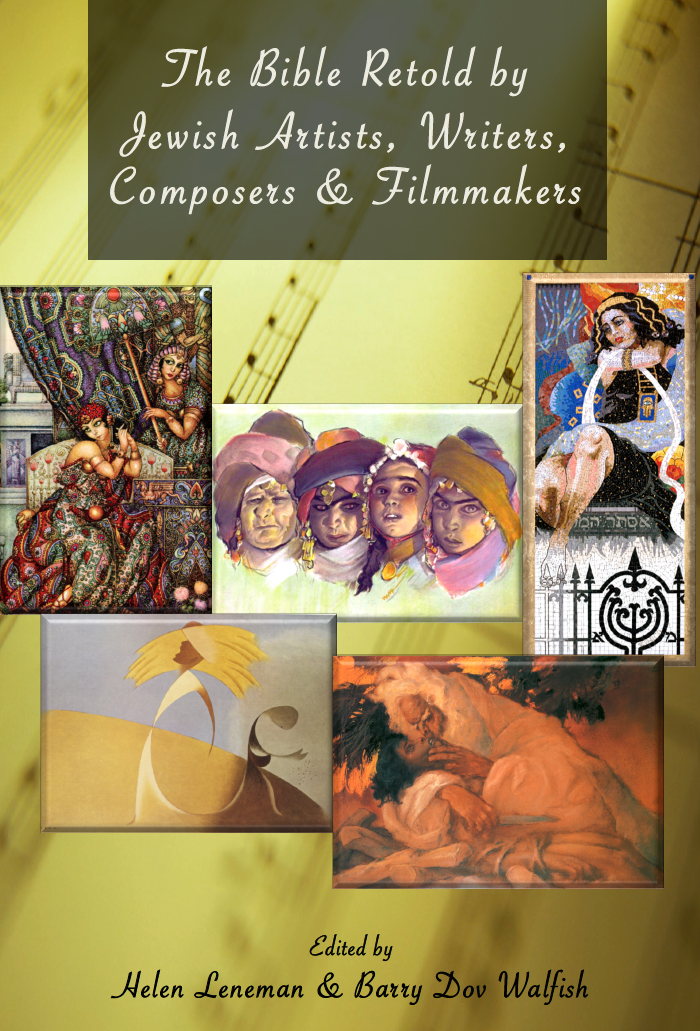
The Bible Retold by Jewish Artists, Writers, Composers and Filmmakers
Published: Oct 2015
£60.00
Helen Leneman and Barry Dov Walfish, both specialists in biblical reception history, have compiled an unusually rich collection of new essays by experts in their fields. This book is a pioneering attempt to portray and analyse the visions of twentieth- and twenty-first century Jewish artists working in different media —visual art, literature (novels, poetry and short stories), music (opera, oratorio and song), and film —who have retold biblical narratives through their art. Reading these essays together will bring a new appreciation and understanding of what makes the perspective of these visual artists, writers, composers and filmmakers on the Hebrew Bible uniquely Jewish.
All of these Jewish visions can be considered a form of modern midrash, as the artists imaginatively fill in gaps in the biblical narrative, bringing a modern sensibility to the meanings of the stories.
Under the heading 'Biblical Women', the stories of the matriarchs, Hagar, and other biblical women are re-imagined in the visual arts, poetry and music. Several further chapters focus on the story of the Aqedah (Binding of Isaac), as represented in the visual arts, literature and music. Other retellings of biblical narratives through short stories are then examined, while yet other chapters explore the books of Esther and Psalms as envisioned and retold in the visual arts, opera, literature and film.
These retellings, analysed and discussed by the authors of this ground-breaking volume, will stimulate the reader to view the texts in new ways or to confront their challenge to personal or traditional interpretations of those texts.
The Bible Retold by Jewish Artists, Writers, Composers and Filmmakers
£60.00
Helen Leneman and Barry Dov Walfish, both specialists in biblical reception history, have compiled an unusually rich collection of new essays by experts in their fields. This book is a pioneering attempt to portray and analyse the visions of twentieth- and twenty-first century Jewish artists working in different media —visual art, literature (novels, poetry and short stories), music (opera, oratorio and song), and film —who have retold biblical narratives through their art. Reading these essays together will bring a new appreciation and understanding of what makes the perspective of these visual artists, writers, composers and filmmakers on the Hebrew Bible uniquely Jewish.
All of these Jewish visions can be considered a form of modern midrash, as the artists imaginatively fill in gaps in the biblical narrative, bringing a modern sensibility to the meanings of the stories.
Under the heading 'Biblical Women', the stories of the matriarchs, Hagar, and other biblical women are re-imagined in the visual arts, poetry and music. Several further chapters focus on the story of the Aqedah (Binding of Isaac), as represented in the visual arts, literature and music. Other retellings of biblical narratives through short stories are then examined, while yet other chapters explore the books of Esther and Psalms as envisioned and retold in the visual arts, opera, literature and film.
These retellings, analysed and discussed by the authors of this ground-breaking volume, will stimulate the reader to view the texts in new ways or to confront their challenge to personal or traditional interpretations of those texts.

Biblical Rhetoric and Rhetorical Criticism
Published: Oct 2015
Price range: £20.00 through £80.00
This volume will prove a classic textbook on rhetorical criticism in the Bible, especially the Hebrew Bible. Following the lead of the famous Presidential Address to the Society of Biblical Literature in 1968 by James Muilenburg, 'Form Criticism and Beyond', Jack Lundbom has for over 40 years been developing and shaping the field with a stream of papers. 26 of them (three not previously published) are gathered into this volume.
Hebrew rhetoric has a long history, reaching back even into the early Israelite period. Recognition of rhetorical elements in the Bible can be seen in Hillel, Augustine, ibn Ezra, and Calvin, as well as among certain biblical scholars of the 18th and 19th centuries. But the revival of rhetoric and the modern method of rhetorical criticism is more recent, having begun in America among classical scholars in the early 1900s, and having been widely adopted by biblical scholars in the last third of the twentieth century. Biblical scholars today invariably have rhetorical criticism in their exegetical toolbox, but the field lacks such a comprehensive corpus of studies as the present volume supplies.
Reading the Bible with an eye to the rhetorical nature of its discourse —not just the style, but its structures and modes of argumentation —gives one a sharpened view of biblical figures, their legacy, and much else in the biblical text. One also gets new insight into the audiences for whom biblical messages were originally intended. Rhetorical criticism offers a ready yield for all those seeking a closer understanding of the biblical texts.
Biblical Rhetoric and Rhetorical Criticism
Price range: £20.00 through £80.00
This volume will prove a classic textbook on rhetorical criticism in the Bible, especially the Hebrew Bible. Following the lead of the famous Presidential Address to the Society of Biblical Literature in 1968 by James Muilenburg, 'Form Criticism and Beyond', Jack Lundbom has for over 40 years been developing and shaping the field with a stream of papers. 26 of them (three not previously published) are gathered into this volume.
Hebrew rhetoric has a long history, reaching back even into the early Israelite period. Recognition of rhetorical elements in the Bible can be seen in Hillel, Augustine, ibn Ezra, and Calvin, as well as among certain biblical scholars of the 18th and 19th centuries. But the revival of rhetoric and the modern method of rhetorical criticism is more recent, having begun in America among classical scholars in the early 1900s, and having been widely adopted by biblical scholars in the last third of the twentieth century. Biblical scholars today invariably have rhetorical criticism in their exegetical toolbox, but the field lacks such a comprehensive corpus of studies as the present volume supplies.
Reading the Bible with an eye to the rhetorical nature of its discourse —not just the style, but its structures and modes of argumentation —gives one a sharpened view of biblical figures, their legacy, and much else in the biblical text. One also gets new insight into the audiences for whom biblical messages were originally intended. Rhetorical criticism offers a ready yield for all those seeking a closer understanding of the biblical texts.
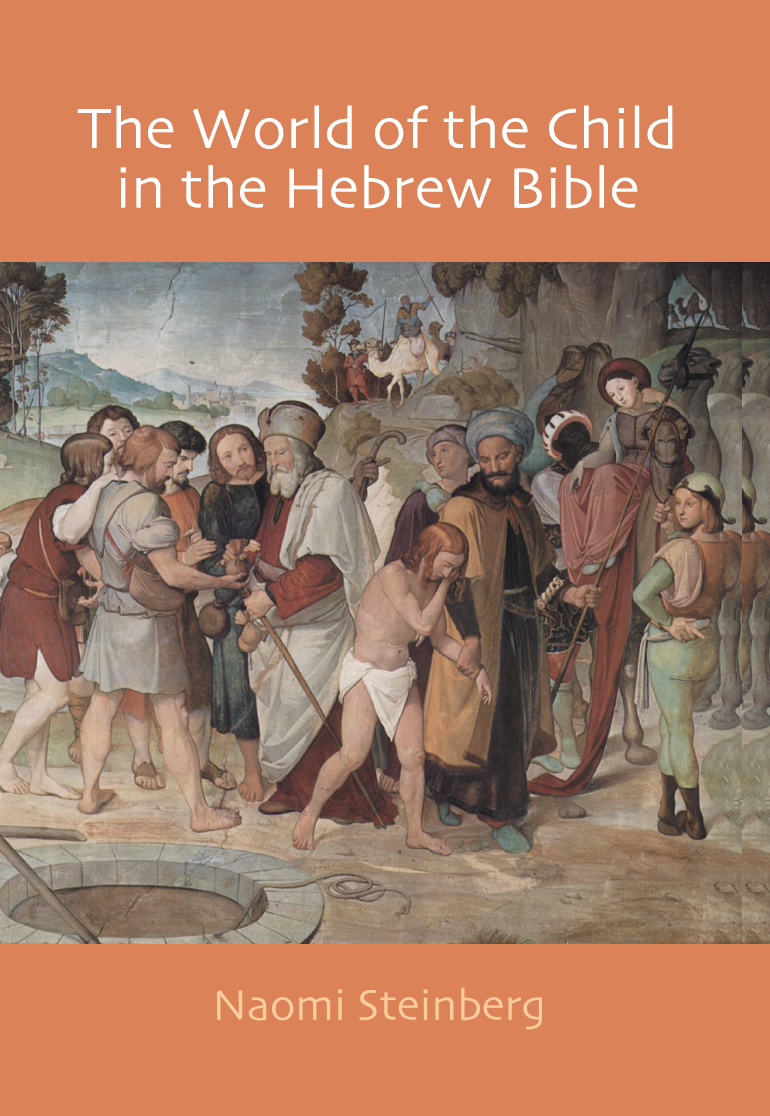
The World of the Child in the Hebrew Bible
Published: Oct 2015
Price range: £18.50 through £50.00
The question 'What is a child?' is not easily answered. To make us aware of the multiple factors that contribute to the social construction of childhood in the Hebrew Bible, Naomi Steinberg draws on ethno-historical evidence and incorporates the insights of contemporary social studies of childhood. Through close readings of Genesis 21, 1 Samuel 1 and Exodus 21.22-25, she argues that chronological age and biological immaturity do not determine the boundaries of childhood in biblical Israel.
The social constructions of childhood in the Hebrew Bible were based on what the child could do for the parent, not vice versa. Children were their parents' property and were used to fulfil their parents' desires and needs. Not all children had the same experiences of childhood, of course. For example, whether a child was born into a monogamous or polygamous family shaped the course of its future. Other relevant factors in the construction of the multiplicities of childhoods included gender, birth order, and the socio-political historical contexts of ancient Israel. Steinberg convincingly corrects the notion that childhood is a static category in the human life cycle, showing that meanings of childhood are not generic and cannot be carried over from one society to another.
This fascinating study, in which the author draws fruitfully on her personal cross-cultural experience of children's lives in Guatemala, exposes the reality that childhood in the Hebrew Bible was radically different from present-day childhood.
The World of the Child in the Hebrew Bible
Price range: £18.50 through £50.00
The question 'What is a child?' is not easily answered. To make us aware of the multiple factors that contribute to the social construction of childhood in the Hebrew Bible, Naomi Steinberg draws on ethno-historical evidence and incorporates the insights of contemporary social studies of childhood. Through close readings of Genesis 21, 1 Samuel 1 and Exodus 21.22-25, she argues that chronological age and biological immaturity do not determine the boundaries of childhood in biblical Israel.
The social constructions of childhood in the Hebrew Bible were based on what the child could do for the parent, not vice versa. Children were their parents' property and were used to fulfil their parents' desires and needs. Not all children had the same experiences of childhood, of course. For example, whether a child was born into a monogamous or polygamous family shaped the course of its future. Other relevant factors in the construction of the multiplicities of childhoods included gender, birth order, and the socio-political historical contexts of ancient Israel. Steinberg convincingly corrects the notion that childhood is a static category in the human life cycle, showing that meanings of childhood are not generic and cannot be carried over from one society to another.
This fascinating study, in which the author draws fruitfully on her personal cross-cultural experience of children's lives in Guatemala, exposes the reality that childhood in the Hebrew Bible was radically different from present-day childhood.
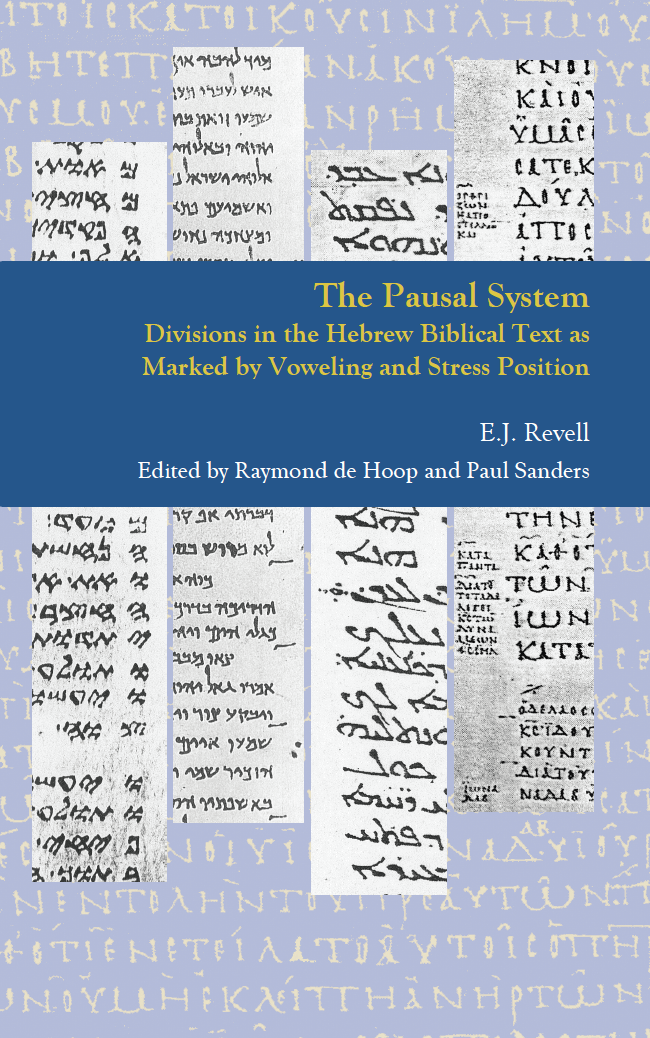
The Pausal System: Divisions in the Hebrew Biblical Text as Marked by Voweling and Stress Position. Edited by Raymond de Hoop and Paul Sanders
Published: Oct 2015
£45.00
In the Hebrew Bible, the 'pausal system' is a set of variations in voweling and stress position that marks the ends of units of various sizes. Pausal forms are already well known and have long been included in grammatical works.
However, it is rarely noticed that many pausal forms occur at unexpected positions. They may be marked with any disjunctive accent, or even with one of the conjunctive accents. The pausal forms represent an earlier division of the text and deserve special attention.
In addition to the pausal forms, the retraction of word stress (nesigah) and the use of the vowel qames on conjunctive waw also appear to mark the ends of units. All these indicators are included in this comprehensive study of the pausal system and in the accompanying list of terminal markers. The volume contains the first classified list of all the relevant forms in the Hebrew Bible.
The Pausal System: Divisions in the Hebrew Biblical Text as Marked by Voweling and Stress Position. Edited by Raymond de Hoop and Paul Sanders
£45.00
In the Hebrew Bible, the 'pausal system' is a set of variations in voweling and stress position that marks the ends of units of various sizes. Pausal forms are already well known and have long been included in grammatical works.
However, it is rarely noticed that many pausal forms occur at unexpected positions. They may be marked with any disjunctive accent, or even with one of the conjunctive accents. The pausal forms represent an earlier division of the text and deserve special attention.
In addition to the pausal forms, the retraction of word stress (nesigah) and the use of the vowel qames on conjunctive waw also appear to mark the ends of units. All these indicators are included in this comprehensive study of the pausal system and in the accompanying list of terminal markers. The volume contains the first classified list of all the relevant forms in the Hebrew Bible.
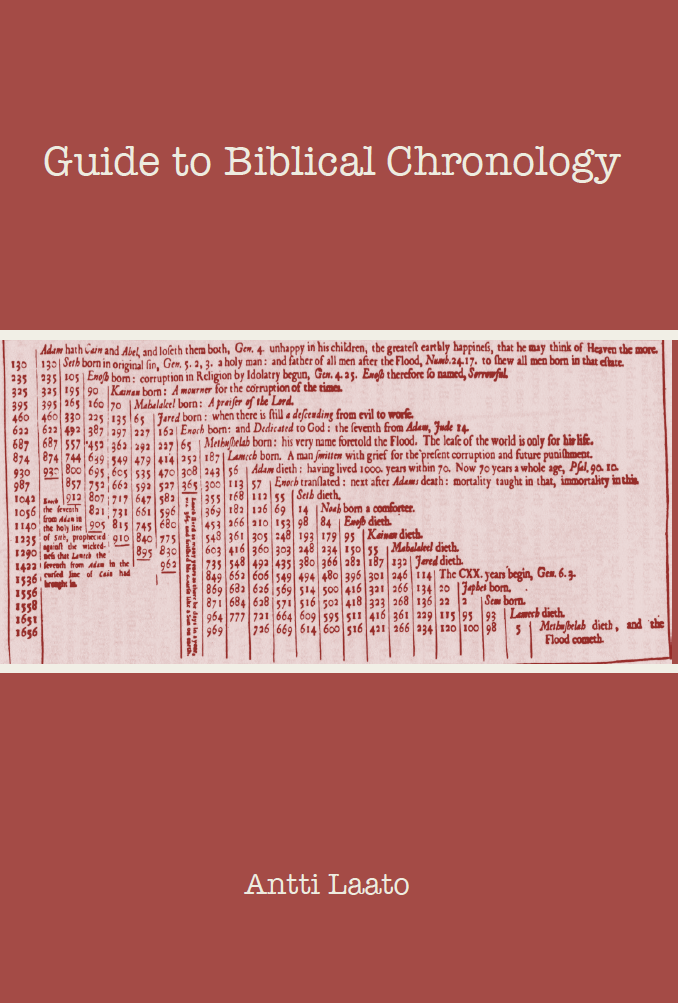
Guide to Biblical Chronology
Published: Sep 2015
£18.50
This Guide to Biblical Chronology aims to explain why different chronological proposals exist for the reigns of kings of Israel and Judah and how the conflicting chronological data preserved in the Books of Kings have come into being.
The first step is to reconstruct older chronological data so that synchronisms are in harmony with each other. Only then can the chronological data be related to extrabiblical documents; such a comparison reveals a good degree of correspondence. This means that the chronological records of the kings of Judah and Israel during the period between 930 and 586 BCE must have based on reliable annalistic records from royal archives.
After the destruction of Samaria, synchronic chronological presentations of the history of Judah and Israel were composed and the Deuteronomistic editors used them. They drew their own conclusions from the source material and created a chronology of their own, which sometimes led to the contradictions we can detect in the present form of the Hebrew Bible.
Another important result is that the 480-year period mentioned in 1 Kings 6 and the 300-year period in Judges 11 are also based on the pre-Deuteronomistic chronological tradition even though they are not based on archival material and are therefore unreliable figures.
The Guide to Biblical Chronology also deals with postbiblical Jewish chronology, showing that there were in existence two different and competing chronological systems. One was based on Daniel 9.24-27 and followed by Josephus, and the other was first advanced by Demetrius the Chronographer in the late third century BCE and was then followed in the Damascus Document from Qumran and in Second Baruch .
Guide to Biblical Chronology
£18.50
This Guide to Biblical Chronology aims to explain why different chronological proposals exist for the reigns of kings of Israel and Judah and how the conflicting chronological data preserved in the Books of Kings have come into being.
The first step is to reconstruct older chronological data so that synchronisms are in harmony with each other. Only then can the chronological data be related to extrabiblical documents; such a comparison reveals a good degree of correspondence. This means that the chronological records of the kings of Judah and Israel during the period between 930 and 586 BCE must have based on reliable annalistic records from royal archives.
After the destruction of Samaria, synchronic chronological presentations of the history of Judah and Israel were composed and the Deuteronomistic editors used them. They drew their own conclusions from the source material and created a chronology of their own, which sometimes led to the contradictions we can detect in the present form of the Hebrew Bible.
Another important result is that the 480-year period mentioned in 1 Kings 6 and the 300-year period in Judges 11 are also based on the pre-Deuteronomistic chronological tradition even though they are not based on archival material and are therefore unreliable figures.
The Guide to Biblical Chronology also deals with postbiblical Jewish chronology, showing that there were in existence two different and competing chronological systems. One was based on Daniel 9.24-27 and followed by Josephus, and the other was first advanced by Demetrius the Chronographer in the late third century BCE and was then followed in the Damascus Document from Qumran and in Second Baruch .

Solomon the Lover and the Shape of the Song of Songs
Published: Sep 2015
£50.00
Reading the Song of Songs perpetually raises the question, What is this love that has been sung about so evocatively to ever new generations? The exuberance of the poetry and the remarkable history of its reception make the understanding of what the poetry is all about the more urgent for the conscientious reader.
The shape of the Song and what this shape reveals of the poet's concerns are central for this study. Hauge's analysis discloses that a special arrangement of formally independent units, signalled by effects of repetition, is typical of its composition. The strophes are set out in a fivefold pattern containing three types of passage: narrative elements, addresses to the daughters of Jerusalem, and dialogues between the lovers.
The tension of the opening scenes dedicated to Solomon and his women, contrasted with a final scene where the king is the humble supplicant, reflects an underlying story of how Solomon the lover of many women was transformed into a lover of the One. The story is dedicated to the power of love, its character as an overwhelming force being even accented by implications of shame. Motifs of absence and separation suggest longing as the essence of love, the final image of the lover as the hart upon the fragrant mountains adding a tinge of sadness to the impression.
Themes from the Solomon tradition are important for the narrative strand. The formal shape and the cast of actors are deeply influenced by Proverbs 1 —7, not least when the poet plays havoc with venerable aspects of the wisdom tradition.
Solomon the Lover and the Shape of the Song of Songs
£50.00
Reading the Song of Songs perpetually raises the question, What is this love that has been sung about so evocatively to ever new generations? The exuberance of the poetry and the remarkable history of its reception make the understanding of what the poetry is all about the more urgent for the conscientious reader.
The shape of the Song and what this shape reveals of the poet's concerns are central for this study. Hauge's analysis discloses that a special arrangement of formally independent units, signalled by effects of repetition, is typical of its composition. The strophes are set out in a fivefold pattern containing three types of passage: narrative elements, addresses to the daughters of Jerusalem, and dialogues between the lovers.
The tension of the opening scenes dedicated to Solomon and his women, contrasted with a final scene where the king is the humble supplicant, reflects an underlying story of how Solomon the lover of many women was transformed into a lover of the One. The story is dedicated to the power of love, its character as an overwhelming force being even accented by implications of shame. Motifs of absence and separation suggest longing as the essence of love, the final image of the lover as the hart upon the fragrant mountains adding a tinge of sadness to the impression.
Themes from the Solomon tradition are important for the narrative strand. The formal shape and the cast of actors are deeply influenced by Proverbs 1 —7, not least when the poet plays havoc with venerable aspects of the wisdom tradition.
Ezra: A Commentary
Ezra: A Commentary