
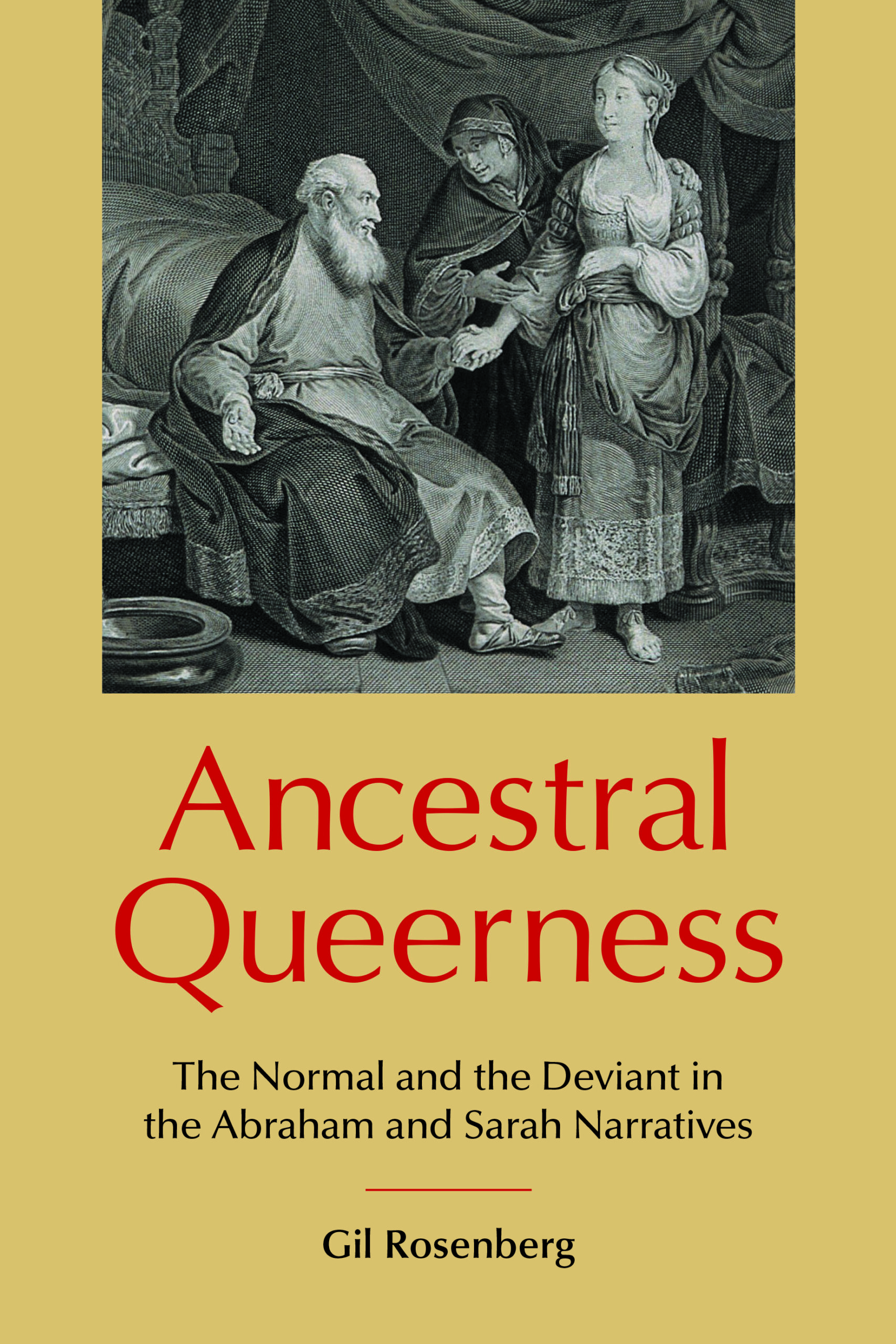
Ancestral Queerness: The Normal and the Deviant in the Abraham and Sarah Narratives
Original price was: £60.00.£27.50Current price is: £27.50.
What would it look like to be queer in the time of Abraham and Sarah? What is normative and what is deviant in their stories? What does this have to do with queer lives today?
What would it look like to be queer in the time of Abraham and Sarah? What is normative and what is deviant in their stories? What does this have to do with queer lives today?
In Ancestral Queerness, Gil Rosenberg uses a careful comparative method to develop a cross-cultural queer category (‘Queer’). He applies this category to Abraham and Sarah and argues that, Abraham and Sarah may usefully be regarded as ‘Queer’.
Rosenberg’s comparisons draw on a variety of contemporary queer stories, scholarship, and theories. These include a lesbian mother trying to support her partner and newborn daughter, Australian polyamorous families, Lee Edelman’s figure of the Child, and gay men building families through surrogacy.
These comparisons lead Rosenberg to surprising new interpretations of several key passages in Genesis 11 —21. For example, he argues that Abraham wants to hide his marriage to Sarah because their relationship is a queer one, and that Sarah may not actually be wanting a biological child. Rosenberg also highlights the combination of normative and deviant elements in Abraham’s strategies for obtaining an heir, and the role of ethnic and class difference in Abraham’s and Sarah’s efforts to become more normative.
Bold in its conclusions but careful and precise in its method, Ancestral Queerness breaks new ground by developing a queer theory applicable to diverse cultures, revealing the bias in previous scholarship on Abraham and Sarah, and opening up new paths of interpretation in their narratives.
David Schones, Independent Scholar writing for ‘The Bible and Critical Theory’ –
In short, Rosenberg’s Ancestral Queerness offers a provocative queer reading
of the Abraham and Sarah narratives that evaluates their relationship, childless
status, and reproductive strategies as non-normative acts. Rosenberg’s work also
helps redefines what makes something “queer.” His suggestion that Abraham and
Sarah undermine gender normativity by deviating from non-sexual acts broadens
the scope of queer biblical scholarship. While I certainly have questions about the
full implications of Rosenberg’s analysis, the project certainly speaks to the need for
additional work on queer sociality. Ultimately, Ancestral Queerness is a thought-
provoking work that, at the very least, challenges the assumptions about what makes
someone queer in both ancient Near Eastern and contemporary contexts.